Views: 0 Author: Kathy Ye Publish Time: 2026-10-23 Origin: https://taihusnow.com/


A sleep scrunchie should balance comfortable hold, suitable fabric volume and consistent construction. For brands, wholesalers and importers, the sourcing decision starts with the intended customer—not simply an oversized shape or a popular retail reference.
Whether your collection focuses on blowout maintenance, loose ponytails or heatless styling, the product specification should explain how the accessory is constructed, who it is designed for and how its performance will be evaluated.
This guide covers material selection, sizing, sample checks and private-label development for overnight hair accessories.
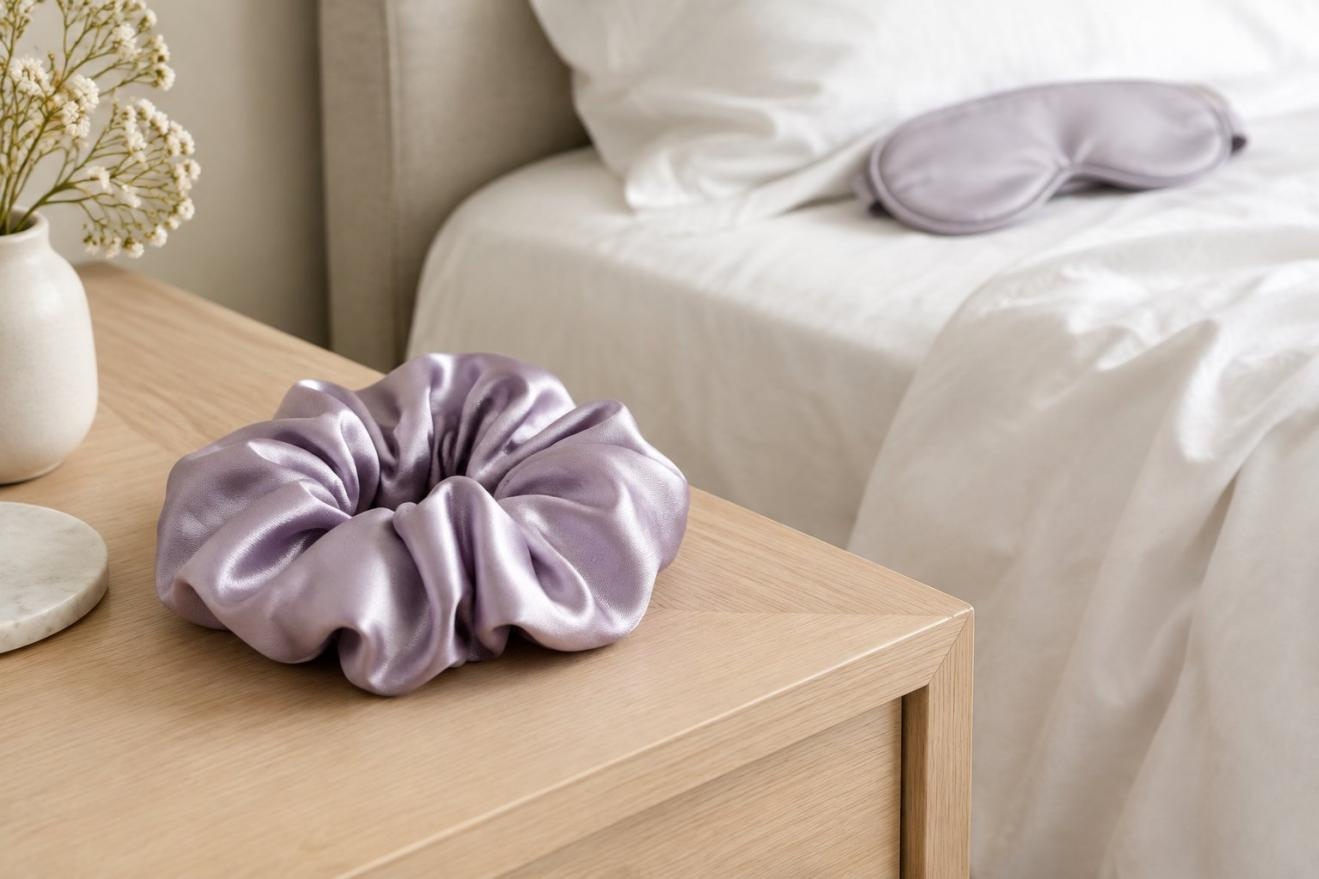
The original Sleepy Tie is a branded double-scrunchie product positioned around maintaining styled hair overnight. Its official product information describes a satin construction. It should therefore be treated as a specific retail reference, rather than a generic name for every fabric-covered hair tie. Sleepy Tie product information
Kitsch satin sleep accessories provide another market reference, including multipack formats. These examples can help buyers understand category presentation, but they do not establish the fabric, dimensions or performance requirements for a new private-label collection. Kitsch product information
TikTok demonstrations and marketplace reviews may reveal customer expectations. Buyers should translate those expectations into measurable requirements rather than copying product descriptions, branded names or unsupported claims.
A useful development brief should define:
· The intended customer and overnight use.
· Fabric composition and construction.
· Finished dimensions and material volume.
· Required hold and recovery.
· Branding, packaging and sample approval requirements.
The same design will not fit every head of hair. Length, density, texture and styling habits influence how much capacity and hold a product needs.
A larger outer diameter does not automatically make an accessory more comfortable. Additional fabric increases bulk, while a stronger core may change the pressure experienced during wear.
Customer group or styling need | Development priority | Sample assessment |
Fine hair or thin hair | Lower bulk and an appropriate inner opening | Slipping, removal and the number of wraps required |
Thick hair or longer lengths | Sufficient capacity and dependable recovery | Hold without excessive pulling |
Curly hair | Room for a loose gathered style | Compression, fit and ease of removal |
Wavy styles | Suitable support without unnecessary bulk | Comfort and appearance after wear |
Half-up styles | A smaller opening and manageable volume | Stability when gathering less hair |
For longer lengths, avoid using a fixed rule such as “several inches past shoulder length” as the only sizing criterion. Customers with similar lengths may have very different hair volume.
Brands should identify their intended users before approving one universal size.
Silk identifies a fibre. Satin describes a fabric construction and may be made from silk, polyester or other fibres.
For a premium silk scrunchie, specify the outer-fabric composition, weight, finish and applicable care requirements. If the fabric is described as pure mulberry silk, clarify that this statement applies to the fabric rather than every component.
The internal elastic band, sewing thread, labels and any padding may contain other materials.
Record momme where relevant, but do not use fabric weight alone as proof of finished-product quality. Stitching, surface finish, sizing and recovery also affect the result.
When comparing samples, keep dimensions and construction reasonably consistent. Otherwise, differences in bulk or tension may be mistaken for differences caused by fabric.
Taihu Snow’s silk accessory manufacturing options can support discussions about material, sizing and customization requirements.
A soft outer fabric cannot compensate for an unsuitable core.
The goal is to hold hair securely without unnecessary tension. Buyers should evaluate whether the product remains in place, returns toward its original dimensions after stretching and can be removed without an uncomfortable tug.
Traditional hair ties, coil hair ties and fabric-covered ponytail holders use different constructions. They should not be assumed to deliver the same overnight experience.
Agree on a sample assessment before bulk production.
Check | Assessment method | What to record |
Relaxed dimensions | Measure before use under agreed conditions | Opening, outer dimensions and tolerances |
Extension and recovery | Follow an agreed stretching procedure | Initial dimensions, recovery period and final dimensions |
Internal connection | Inspect a development sample | Join construction and enclosure |
Seams | Examine the closure and contact surfaces | Loose threads, openings and rough areas |
Wearer feedback | Use a consistent assessment form | Hold, pressure, slipping and removal |
Care performance | Follow the proposed care instructions | Changes in appearance, dimensions and function |
Use acceptance criteria agreed between buyer and manufacturer. Do not insert arbitrary test cycles or claim a fixed lifespan without supporting evidence.
Retail language often promises to “preserve your blowout” or protect a “blowout while you sleep.” For a manufacturer-led collection, these phrases should become defined evaluation questions.
Does the product support the intended loose style? Does it remain comfortable during movement? Does the wearer need to redo the hairstyle after removal?
Results may vary with styling technique, hair condition, sleeping position and whether customers toss and turn.
Avoid absolute promises such as:
· “Hair ties no damage.”
· “Wake up frizz-free.”
· “No breakage.”
· “Never leaves a crease.”
If a brand wishes to use a qualified performance statement, retain evidence relevant to the actual supplied product. A smooth surface or gentle elastic may support a design objective, but it does not guarantee identical results for every user.
Position the accessory as part of a hair care routine, not as a treatment.
A short instruction card can help customers use an unfamiliar construction correctly. It should reflect the approved sample rather than instructions copied from another brand.
For a product intended for a loose ponytail or bun, the illustrated sequence might explain how to:
1. Gather your hair in the position demonstrated for that product.
2. Place hair into a high ponytail only where the design and intended use support it.
3. Wrap your hair loosely, avoiding unnecessary tension.
4. Arrange the hair around the accessory as shown.
5. Remove the hair tie without dragging it through the full length.
For fuller constructions, show the sides of the scrunchie and how the gathered hair should sit around the scrunchie.
Avoid presenting a branded “Sleepy Tie bun” as a universal method. Different constructions may require different handling.
If the product supports a braid or a heatless styling system, explain its role accurately. It may secure a section or the ends of the hair rather than create the entire style.
A personal care assortment can combine style with clearly differentiated functions.
Possible formats include a single oversized accessory, a coordinated multipack or a nighttime kit paired with a silk pillowcase. The choice should follow the target customer, intended use and retail presentation.
Before sampling, confirm:
· Quantity per colour, size and design.
· Pack count and assortment ratios.
· Logo or label placement.
· Care and how-to inserts.
· Barcode requirements.
· Individual protection and carton configuration.
Describe the intended audience precisely. A broad label such as “women and girls” does not replace a defined age group, sizing plan or applicable product requirements.
For coordinated products, compare physical colour samples. The same colour reference may appear different across fabrics and finishes.
MOQ and delivery timing depend on the complete specification. Stock fabric, custom colours, printed designs, special constructions and packaging can require different development steps.
Ask the manufacturer to separate:
· Material preparation.
· Sample development and revisions.
· Final sample approval.
· Bulk production.
· Inspection and packing.
· Transportation.
When comparing supply proposals, check that fabric, dimensions, construction, packaging and inspection scope are equivalent.
Before placing an order, keep an approved reference sample and a written specification. Confirm which market documentation is relevant to the product and whether the available reports cover the supplied materials or finished item.
Taihu Snow Silk works with brands developing silk accessories and coordinated collections. Share your target customer, reference design, material requirements, quantities and delivery needs to discuss suitable samples and a product development brief.