Views: 0 Author: Kathy Ye Publish Time: 2026-11-27 Origin: https://taihusnow.com/


Silk pajamas are generally the better premium sleepwear choice when temperature regulation, natural fiber content, and long-term customer value matter, while satin pajamas are usually the lower-cost option when a glossy appearance and accessible price point are the priorities.
For brand buyers, the meaningful comparison is not simply “soft versus soft.” Silk is a fiber, while satin is a weave construction that can be made from silk, polyester, nylon, rayon, or blends. A sourcing brief that says only “satin pajamas” leaves major variables undefined.
Taihu Snow Silk works with buyers developing silk sleepwear and OEM/ODM programs, so this comparison focuses on what should be specified, sampled, tested, and communicated before pajamas reach wholesale, retail, or e-commerce channels.
Silk and satin are not interchangeable materials: silk is a natural protein fiber, while satin describes a weave that creates a smooth, lustrous face. Satin can be made from silk, but most value-market satin pajamas use polyester satin or another synthetic construction.
Silk is a natural protein fiber produced from silkworm cocoons. In premium sleepwear, mulberry silk is the most widely used option because its relatively long, uniform filaments can create a smooth texture and refined drape.
A satin weave is defined by longer yarn floats across the fabric surface. This construction reflects light, giving satin its recognizable glossy finish. The reverse side is usually duller. The weave can be woven from silk, polyester, nylon, acetate, viscose, or blended yarns.
A product labeled “satin” does not tell the buyer what the fabric contains. “Satin is made” from whatever fiber the supplier specifies, and that fiber determines much of the actual wear performance.
For example:
Product description | Likely composition | What it means commercially |
Silk satin pajamas | Usually woven from silk in a satin weave | Premium positioning, higher material cost, breathable comfort |
Polyester satin pajamas | Polyester yarn in satin weave | Lower cost, high sheen, easier broad-market pricing |
Nylon satin sleepwear | Nylon yarn in satin weave | Smooth handfeel, good strength, potentially more static |
Satin-finish knit pajamas | Knit fabric with a satin-like surface | Stretch may be higher, but it is not woven satin |
A buyer should request the fiber percentage, fabric construction, fabric weight, width, color standard, and care method. Do not rely on surface appearance alone.
Both silk and satin may appear fluid, smooth, and elegant under studio lighting. Yet a silk fabric normally offers more natural temperature responsiveness, while synthetic satin may feel less breathable and can trap heat under certain conditions.
This is why the difference between silk and satin matters for product reviews and returns. Consumers often expect “satin” to perform like real silk if product copy is vague. Accurate material naming protects the brand and makes price differences easier to justify.
For most sleepers, silk pajamas provide better breathability and temperature balance than polyester satin pajamas. You do not typically sweat more in silk pjs; lightweight silk can absorb moisture vapor and help the body feel more comfortable across changing nighttime temperatures.
Silk is often valued as a natural fiber that regulates temperature. It can feel cool against the skin in warm conditions yet offer light insulation when rooms are cooler. This does not mean every silk pajama set will keep every wearer cool, because fit, room humidity, duvet weight, and fabric weight all influence sleep comfort.
Polyester satin is less absorbent than silk. Satin can trap heat and moisture when the fabric is heavy, closely fitted, or layered under bedding. That does not make satin pajamas inherently unsuitable for sleep; it means the composition and garment design should fit the intended climate and customer profile.
Silk is usually the stronger choice for customers who sleep hot, especially in lightweight woven constructions. For summer pajamas, buyers can consider a silk camisole and short set, a relaxed short-sleeve shirt with shorts, or a lightweight silk slip.
For satin pajamas aimed at warm nights, use a lighter fabric weight, relaxed silhouette, and short-set option. Avoid presenting polyester satin as cooling simply because it feels cool for a few seconds when touched. Initial cool touch and ongoing breathability are different performance characteristics.
A buyer selecting fabrics for sleepwear should assess the whole garment rather than the fiber name alone.
Sourcing factor | Better direction for warm sleepers | Better direction for cooler temperatures |
Fiber | Mulberry silk or lighter satin alternatives | Silk, heavier satin, or layered styles |
Fabric weight | Lightweight silk | Medium-weight silk or heavier satin |
Fit | Relaxed body and sleeve ease | Relaxed fit with full-length coverage |
Style | Cami sets, shorts, short sleeves | Long pajama sets, robes, slip dresses |
Trim | Minimal heavy lace and dense elastic | Comfortable elastic, piping, or light layering |
Silk may feel cool initially and remain more comfortable when humidity rises. Polyester satin can be a practical fashion-led choice, but claims about temperature performance should be supported by the actual composition and garment test results.
Silk is usually better for skin and hair because its smooth surface reduces friction and its natural fiber characteristics suit many customers with sensitive skin. Satin can also reduce surface friction compared with rougher textiles, but polyester satin does not provide the same fiber properties as silk.
The reason silk is popular for both sleepwear and a silk pillowcase is primarily mechanical: a smooth surface allows hair and skin to move more freely than coarse cotton and flannel. Less friction may help reduce hair tangling, creasing, and the feeling of fabric dragging against the body.
Silk is also gentle on the skin for many wearers. Howe ver, responsible product communication should avoid medical claims. Skin sensitivity varies, and comfort depends on dyes, finishes, seams, trims, laundering residue, and individual conditions.
Synthetic satin can feel slippery and look luxurious, but its performance may differ significantly from silk. Polyester satin may create static, cling to the body, and feel warmer in humid environments. Satin's surface sheen also makes seam puckering, needle damage, and low-quality finishing more visible.
For silk and satin pajamas, garment engineering is essential:
· Use fine, even stitching to limit puckering on a glossy face.
· Check seam allowance and seam strength on side seams, crotch seams, and sleeve joins.
· Specify covered or soft-back elastic for waistbands.
· Test piping, lace, labels, and embroidery against bare skin.
· Review colorfastness, shrinkage, and dimensional stability after washing.
· Sample light colors and dark colors separately, since dye behavior can differ.
A silk pillowcase may be a logical add-on for a silk sleepwear collection, but it should be sourced and specified as its own item. Closure type, envelope depth, zipper quality, and pillowcase sizing need separate review.
Satin is not just cheap silk. Satin pajamas can be made from silk and positioned as luxury goods, while synthetic satin is commonly used to create a lower-cost glossy sleepwear option.
The real difference in cost comes from raw material, yarn quality, weaving technique, fabric finishing, garment complexity, production controls, and order volume. A silk satin pajama set requires a different sourcing strategy than a polyester satin set even when the design looks nearly identical.
For silk, momme is a traditional weight measure often used to indicate fabric substance. A higher momme can mean more silk per area, but it does not automatically mean the best quality. Yarn quality, weave density, finishing, color, and sewing all affect the final garment.
For silk sleepwear, buyers commonly evaluate:
Specification point | Why it matters |
Silk type | Mulberry silk is a recognized premium choice for refined sleepwear |
Momme | Helps compare silk fabric weight within the same construction |
Weave | Satin weave creates sheen and drape; other weaves create different handfeel |
Grade and yarn consistency | Affects smoothness, durability, and appearance |
Dye and finish | Influences color, handfeel, odor, and wash performance |
Garment workmanship | Determines fit, seam appearance, and usable lifespan |
A lightweight silk style may be appropriate for summer pajama sets, while a somewhat more substantial silk can suit classic long-sleeve sets. The right momme should follow the product concept, not become a marketing shortcut.
Silk pajamas are worth the higher price when the buyer’s target customer values genuine fiber content, comfort across seasons, refined drape, and premium gifting potential. They are less suitable when the primary purchase driver is the lowest possible unit price or trend-led color turnover.
For a brand, the question “are silk pajamas worth it” should be translated into commercial terms:
· Can the customer understand the difference between real silk and synthetic satin?
· Does the retail price support quality fabric and careful workmanship?
· Is the product intended as core luxury sleepwear, bridal gifting, resort wear, or corporate gifting?
· Can the brand provide clear care instructions and customer service?
· Is the collection designed for repeatable colors and replenishment, or rapid seasonal change?
Taihu Snow Silk can support brands that need to develop pure silk pajamas with OEM/ODM specification review, fabric selection, sample development, and production coordination. A detailed tech pack and approved quality standard are still essential before bulk manufacturing.
The main differences between silk vs satin are fiber origin, breathability, price structure, care needs, static behavior, and product positioning. The choice between satin and silk should therefore be made at collection level, not style by style without a clear commercial purpose.
A well-planned sleepwear assortment may include both materials, provided their roles are clear. Silk can anchor a premium permanent collection; polyester satin can support accessible occasionwear, seasonal colors, or high-volume promotional programs.
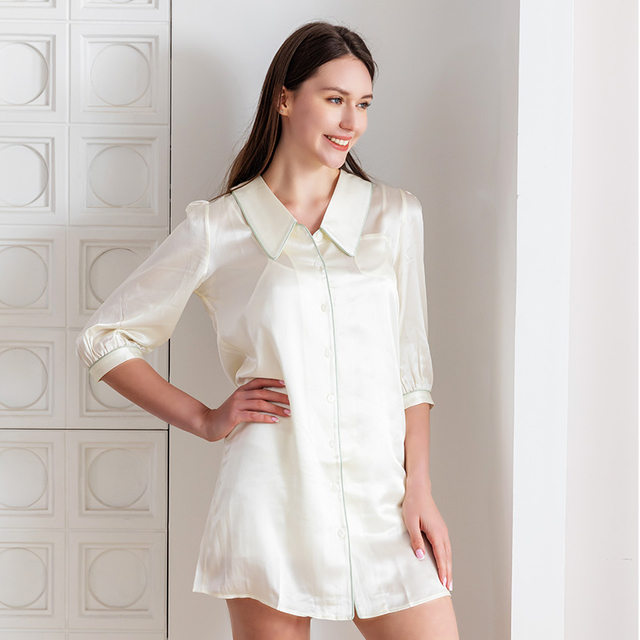
Silk pajamas fit brands selling elevated sleepwear and lingerie, refined bridal pieces, luxury travel sets, and executive or VIP gifts. The fabric has a natural drape that works well for classic button-front pajama sets, robes, camisoles, silk slip styles, and relaxed trousers.
The value proposition should be factual: real silk, stated composition, disclosed momme where relevant, thoughtfully designed fit, and proper care guidance. Avoid comparing silk clothing to synthetic alternatives with absolute claims that cannot be verified.
Synthetic satin is appropriate when the desired look is glossy, fluid, and trend-sensitive, while the program requires a lower unit cost. It can be effective for coordinated satin pieces, bridal-party sets, fashion colors, slip dresses, and short-run promotional collections.
However, buyers should anticipate the trade-offs:
· Static can be more noticeable, especially in dry climates.
· Heavier satin may feel warm for sleepers.
· The fabric can snag or show pulls if yarn quality and finishing are weak.
· Shine can exaggerate fit issues and sewing defects.
· Polyester composition must be disclosed accurately in product listings.
For satin sleepwear, request wash testing, seam testing, and visual inspections under daylight and retail lighting. A garment that looks acceptable under factory lighting may reveal rippling or shine variation in product photography.

The best pajamas for a brand are the ones with a clear material identity, repeatable fit, verified workmanship, and care instructions that match the actual fabric. Buyers should evaluate sample garments after wear and wash tests rather than approving solely from swatches.
A supplier quotation should distinguish fabric cost from garment complexity. Piping, contrast cuffs, covered buttons, embroidery, print placement, lace insertion, and custom packaging can all change cost and lead time.
A complete request for quotation should include the following details:
1. Fiber composition: State “100% mulberry silk,” “100% polyester satin,” or the exact blend. Never use “silky” as a material description.
2. Fabric construction: Identify whether it is woven satin, satin-finish knit, charmeuse, or another weave.
3. Fabric weight: For silk, state target momme; for synthetic satin, specify grams per square meter where applicable.
4. Color standard: Provide Pantone references, lab dips, or approved swatches.
5. Garment measurements: Use graded specifications with tolerances, not only general size labels.
6. Trim details: Define buttons, piping width, elastic type, labels, hangtags, and packaging.
7. Performance requirements: Set expectations for shrinkage, colorfastness, seam strength, pilling where relevant, and appearance after laundering.
8. Inspection standard: Agree on acceptable quality level, defect definition, and pre-shipment inspection procedure.
A fabric swatch cannot show how a collar rolls, how a waistband recovers, or whether a glossy weave pulls at seam intersections. Require a development sample and pre-production sample before bulk approval.
The most reliable way to identify composition is supplier documentation and appropriate laboratory testing. Visual inspection can provide clues, but it cannot prove whether a glossy fabric is pure silk, silk blend, or synthetic satin.
Silk often has a softer, less mirror-like luster than polyester satin, with subtle light variation rather than a uniform plastic sheen. It may feel less static and more temperature-responsive. Polyester satin can look highly reflective and may produce more static friction, but these are indicators only.
Do not use burn tests as a routine brand-side verification method. They can be unsafe, are unreliable for blends or finished fabrics, and are unsuitable as formal quality evidence. Request composition testing when material authenticity is commercially important.
Silk and satin pajamas can be washed, but the correct method depends on fiber content, dyeing, trims, and garment construction. Silk generally needs more cautious handling than polyester satin, and care labels should be validated through actual wash testing before production.
For many silk pajamas, gentle hand washing in cool water with a silk-appropriate detergent is the conservative care approach. Some silk programs may be developed and tested for machine washing on a delicate cycle, but this should not be assumed.
To wash silk responsibly, avoid bleach, strong alkaline detergents, aggressive wringing, and high heat. Dry away from direct sun, reshape while damp, and use low-temperature ironing if needed with an appropriate protective layer.
To wash satin, first identify whether it is silk satin or synthetic satin. A generic “wash satin” instruction is incomplete because a satin weave made from silk requires different treatment from polyester satin.
Care point | Silk satin pajamas | Polyester satin pajamas |
Water temperature | Cool water | Usually cool water |
Wash method | Hand washing or tested delicate cycle | Delicate machine cycle may be suitable |
Detergent | Mild detergent formulated for delicate fibers | Mild detergent |
Bleach | Avoid | Avoid unless care testing supports otherwise |
Drying | Air dry away from heat and sun | Low heat or air dry according to tested label |
Ironing | Low heat, preferably inside out | Low heat if needed, test first |
Care instructions are not an afterthought. They influence review scores, returns, and how long the product maintains its surface. A premium silk program should include practical care copy in the hangtag, packaging insert, and product page.
For buyers comparing silk vs satin, start by defining the target retail tier, climate, customer expectations, and intended wear occasions. Then request material documentation and development samples from Taihu Snow Silk to build a sleepwear collection with a clear, defensible specification.
Developing a silk pajama collection? Send Taihu Snow your target market, preferred fabric weight, styles, and estimated order quantity to discuss fabric options and sample development.