Views: 0 Author: Kathy Yee Publish Time: 2026-08-20 Origin: https://taihusnow.com/


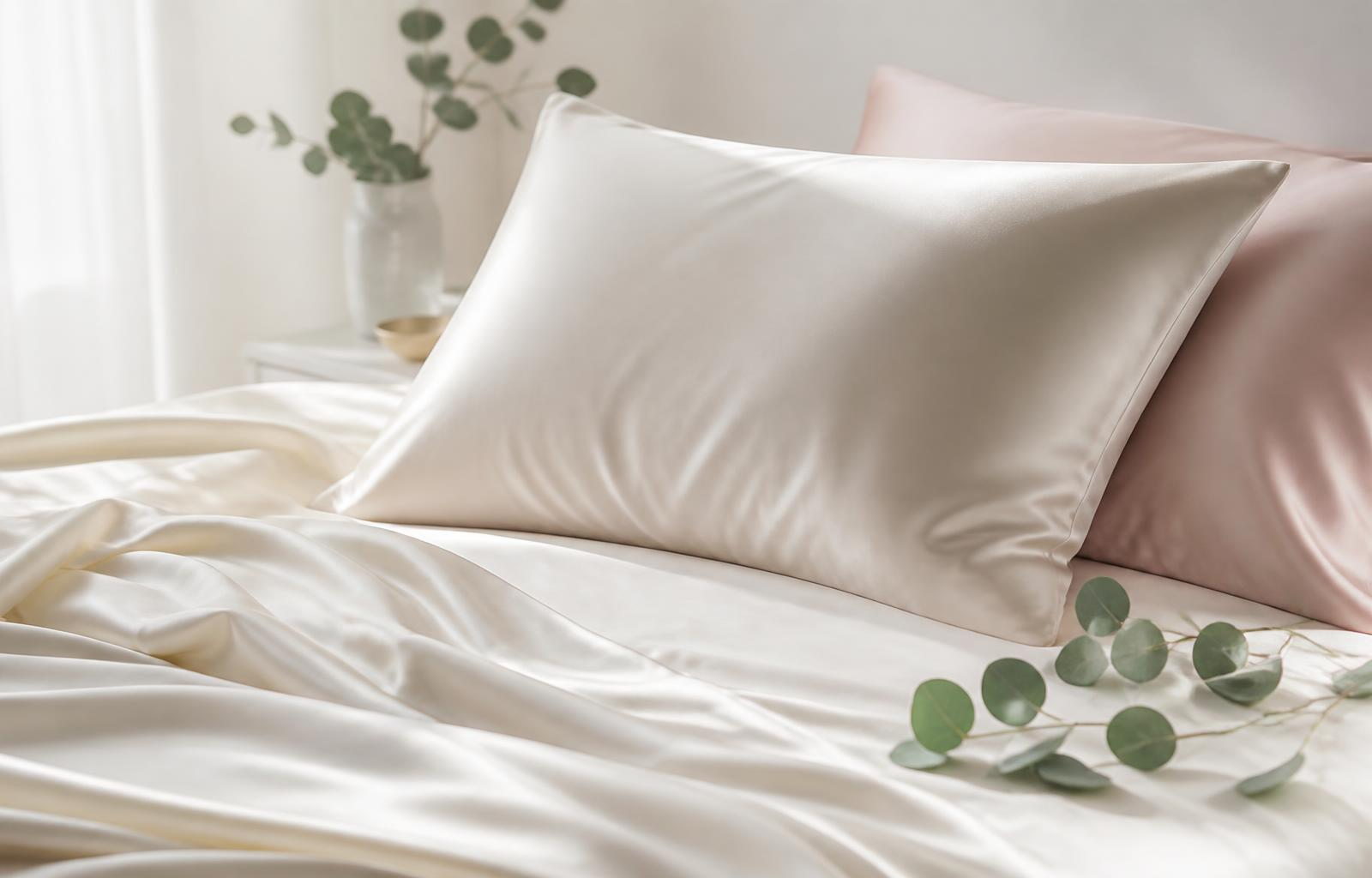
If you wake up with a blocked nose, itchy eyes, or irritated skin, your bedding is one of the first places to look. Dust mites live in the warm, humid layers of your bed, and the fabric you sleep against every night decides how comfortable that environment is for them. This guide answers a question we hear constantly from customers and brand partners: is silk hypoallergenic, and does silk bedding genuinely help allergy sufferers?
It is worth reading because most articles on this topic either overpromise or stay vague. Below you will find how the structure of silk actually resists allergens, what silk can and cannot do for allergy symptoms, how it compares with cotton and synthetic options, which momme weight to choose, and how to care for silk bedding so it keeps working. We are Taihu Snow Silk, a Suzhou silk manufacturer since 2002 with our own mulberry farms and weaving mills, so these notes come from producing the fabric rather than reselling it.
Yes, silk is a hypoallergenic material, but the word deserves a careful definition. Hypoallergenic does not mean allergy-proof. It means the material is unlikely to trigger an allergic reaction and is less hospitable to the allergens that cause problems in bedding. Silk qualifies on both counts, which is why silk bedding is often recommended for people with sensitive skin, eczema, or dust mite allergies.
The reason sits in the fibre itself. Silk is a natural protein fibre produced by Bombyx mori silkworms, made mainly of two proteins: fibroin, which forms the structure of silk, and sericin, the gum that coats raw silk threads. Because silk proteins are close in composition to human keratin, the fabric rarely provokes contact dermatitis or irritation in the way that coarse or chemically treated textiles can.
So when we say silk is naturally hypoallergenic, we mean two separate things: the fibre itself is very unlikely to be a common allergen, and the fabric resists the secondary allergens — dust mites and mold — that accumulate in bedding over time.
House dust mites need three things: warmth, humidity above roughly 50%, and shed skin cells to feed on. Ordinary bedding supplies all three generously. Silk interferes with the second and third.
Silk is highly breathable and moisture-regulating. Silk wicks away moisture and releases it into the air rather than holding it against the surface, which keeps the sleep environment drier than cotton bedding tends to be. A drier microclimate is measurably less attractive to mites, because they absorb water from humid air rather than drinking it.
The structure of silk matters too. Silk charmeuse is tightly woven from long, smooth filaments, so there are far fewer loose fibre ends and open pockets for dust and skin flakes to settle into. Cotton and wool have short, textured staple fibres that trap debris; the fibres of silk are continuous and slick. Less debris means less food, and less food means a smaller mite population.
Mulberry silk contains sericin, a natural protein that coats the silk filament as the silkworm spins it. Sericin has been shown to have antimicrobial and moisture-binding characteristics, and it is a large part of why silk is credited with the ability to repel dust mites and mold.
An honest caveat is needed here. Most finished silk fabric is degummed, meaning much of the sericin is washed out to give silk its familiar softness and drape. Some sericin remains, and it contributes to silk's hypoallergenic qualities, but the anti-allergen performance of a finished silk pillowcase comes mostly from the tightly woven structure and moisture behaviour rather than from sericin alone.
This is where marketing often overreaches. Sericin is a genuine advantage of natural silk over synthetic silk or polyester satin, but it is not a pesticide. Silk creates unfavourable conditions for allergens; it does not eliminate them.
The first benefit is reduced allergen load. Because silk bedding resists dust mites and mold, the total quantity of allergen protein in your immediate breathing zone tends to be lower. For people whose allergy symptoms peak overnight and on waking, that is the most relevant measure.
The second benefit is reduced mechanical irritation. A silk pillowcase reduces that nightly abrasion. Silk is gentle on the skin because its surface generates very little friction. For sensitive skin, eczema, or facial dermatitis, friction is an aggravating factor in its own right — rubbing against a rougher fabric can inflame skin that is already reactive. A silk pillowcase reduces that nightly abrasion, which is one reason dermatologists often recommend silk for compromised skin.
The second benefit is reduced mechanical irritation. Silk is gentle on the skin because its surface generates very little friction. For sensitive skin, eczema, or facial dermatitis, friction is an aggravating factor in its own right — rubbing against a rougher fabric can inflame skin that is already reactive. A silk pillowcase reduces that nightly abrasion, which is one reason dermatologists often recommend silk for compromised skin.
The third benefit is thermoregulation. Silk keeps you cooler when it is warm and retains warmth when it is cold, so you perspire less. Less perspiration means lower humidity in the bed, which loops back to suppressing dust mites and mildew. These three effects reinforce each other, which is why silk bedding offers more than the sum of its individual claims.
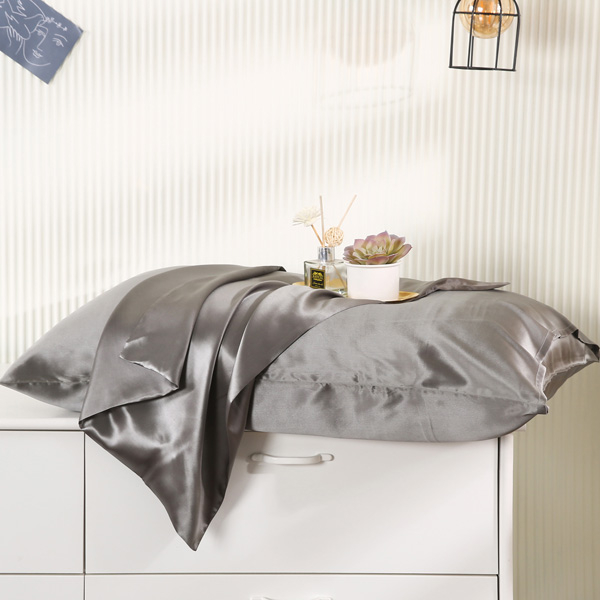
If you are testing silk for the first time, start with a silk pillowcase. Your face spends seven or eight hours pressed against that one surface, and it is where dust mite allergens, facial oils, and skincare residue concentrate. A pillowcase is the highest-impact, lowest-cost entry point, and it is where most people notice a difference in skin comfort first.
For someone with diagnosed dust mite allergies, the pillow itself matters as much as the case. A hypoallergenic pillow filled with silk floss, paired with a silk pillowcase, addresses both the surface and the reservoir underneath. Fabric alone cannot fix an old pillow that has been accumulating allergens for years.
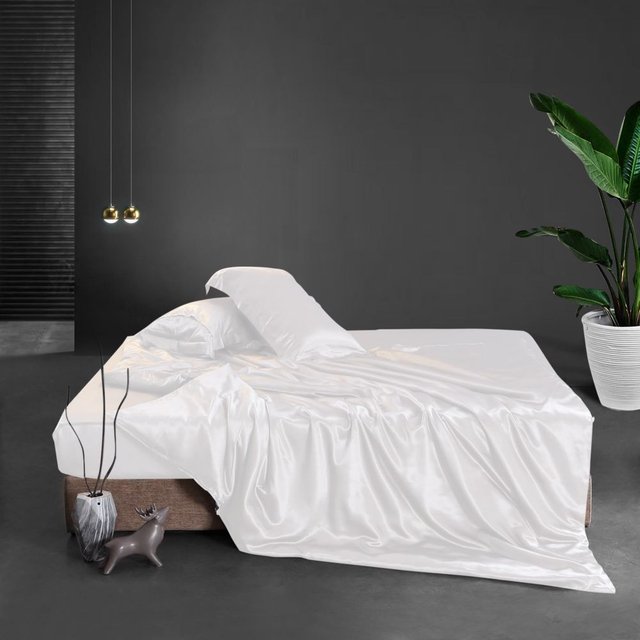
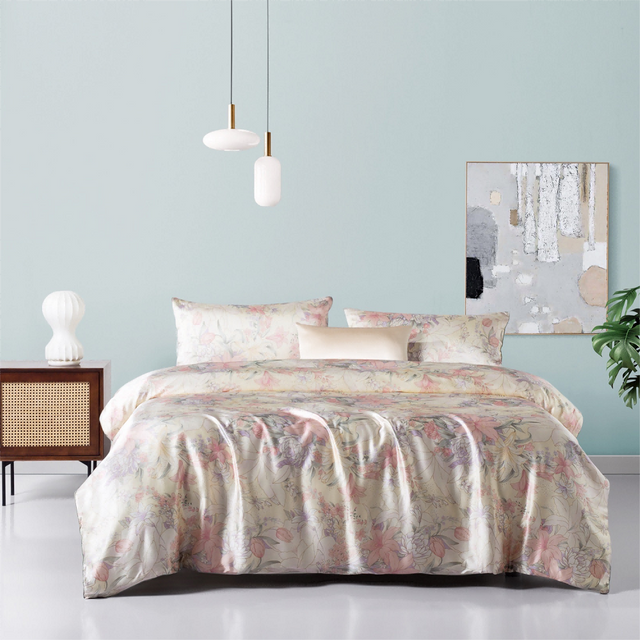
Full silk sheets and a silk comforter extend the same logic across the whole bed. That is the most effective configuration, but it is a significant investment. A sensible sequence is pillowcase first, then pillow, then duvet cover and sheets as budget allows.
Cotton is breathable, washable, and inexpensive, and organic cotton avoids many of the chemical finishes used on conventional cotton. It is a reasonable bedding fabric. But cotton is absorbent by design: it holds perspiration in the fabric, raising local humidity, and its staple fibres trap skin cells. Both conditions favour mites.
Silk is a better hypoallergenic alternative on those two specific measures. It moves moisture away instead of storing it, and its smooth filament structure gives allergens less to cling to. Bedding materials like cotton also tend to be laundered hot, which kills mites effectively — a genuine advantage for cotton that silk cannot match, since silk requires cooler washing.
The practical comparison, then, is not that one fabric wins outright. Cotton tolerates aggressive cleaning; silk prevents accumulation in the first place. For people with sensitive skin or friction-aggravated conditions, silk's gentleness usually decides it. For those who rely on hot washing as their main allergen strategy, a silk pillowcase over a hot-washable pillow protector is a good compromise.
Polyester satin is often sold as a cheaper stand-in for silk, and it does share one property: a smooth surface with low friction. That is where the similarity ends. Synthetic fibre is not breathable in the same way, so it traps heat and perspiration against the skin, raising humidity in exactly the way dust mites prefer.
Synthetic satin also builds static, which attracts and holds airborne dust rather than letting it fall away. And because polyester lacks silk's protein structure and any trace of sericin, it offers none of silk's antimicrobial contribution. For an allergy sufferer, "satin" is not a substitute for silk — it is a different material with a similar sheen.
If you are choosing silk, verify that you are buying pure silk rather than a blend or a satin weave in a synthetic fibre. Look for 100% mulberry silk stated explicitly, a momme weight, and an OEKO-TEX Standard 100 certificate. Our silk is certified to Class II, the category for textiles in direct skin contact, and every certificate can be verified by number on the OEKO-TEX site.
Momme is the weight measure for silk fabric. Higher momme means a denser, more tightly woven fabric with a longer service life. For bedding, 19, 22, and 25 momme are the practical range, and 22 momme is the balance point most buyers settle on.
For allergen resistance specifically, denser is better. A 25 momme weave presents a tighter barrier than a 16 momme one, and it withstands repeated washing — which matters, because regular laundering is part of any allergen strategy. Very light silk feels lovely but wears out faster under a frequent wash cycle.
Grade is the second variable. High-quality silk bedding uses 6A grade mulberry silk, the longest and most uniform filament classification, which produces fewer weak points and less fibre breakage over time. Cheaper grades shed more, and shed fibre is exactly what you are trying to avoid. Choosing silk at 6A, 22 momme, with an OEKO-TEX certificate, covers the three variables that actually affect performance.
Silk's advantages are structural, but they only persist if the fabric is kept clean. Wash silk items every one to two weeks — weekly for pillowcases if you have active allergy symptoms. Use cool water, no hotter than 30°C, with a pH-neutral detergent made for delicates. Avoid bleach and avoid enzyme-based detergents, which digest protein and therefore attack silk proteins directly.
Skip the fabric softener. It leaves a residue that coats the filament, dulls the surface, and undermines the moisture-wicking behaviour that suppresses mites. Air dry away from direct sun and heat, and never tumble dry on high. Detailed instructions are in our guides on washing a silk pillowcase and caring for a silk comforter.
Two additions make a real difference for dust mite allergies. Encase the pillow and mattress in tightly woven allergen-barrier covers underneath your silk layers, so the reservoir is sealed. And keep bedroom humidity below 50% with ventilation or a dehumidifier — no bedding fabric can compensate for a humid room.
Silk bedding can help reduce your exposure to dust mites and other allergens, lower nightly skin irritation, and keep your sleep environment drier and cooler. Many people with mild to moderate dust mite sensitivity report waking with less congestion after switching. Those are reasonable expectations.
What silk cannot do is treat an allergy. It is not a medical device and it does not desensitise your immune system. If you have asthma or diagnosed allergic rhinitis, silk bedding is one component of an environmental control plan that also includes barrier covers, humidity control, regular washing, and whatever your doctor has prescribed. Anyone claiming a fabric eliminates dust mites is overselling.
It is also worth noting that silk allergy itself is very rare but not impossible; reactions are typically traced to residual sericin in raw silk or to dyes and finishes rather than to the fibre. This is precisely why certification matters. An OEKO-TEX Standard 100 certificate confirms the finished textile has been tested against a long list of harmful substances, which removes the most common cause of unexpected reactions to new bedding.
l Silk is hypoallergenic in the meaningful sense: the fibre rarely triggers reactions, and the fabric resists dust mites and mold. It is not allergy-proof, and no textile is.
l Dust mites need humidity and shed skin. Silk stays drier than cotton and its tightly woven filaments trap far less debris, so mite populations stay lower.
l Mulberry silk contains sericin, which contributes antimicrobial properties, but most anti-allergen performance comes from the weave structure and moisture behaviour.
l Silk reduces friction, which matters independently for sensitive skin, eczema, and facial irritation.
l Start with a silk pillowcase, then upgrade the pillow, then sheets and comforter. The pillow area delivers the largest benefit per dollar.
l Choose 100% mulberry silk, 6A grade, 22 momme or higher, with a verifiable OEKO-TEX Standard 100 certificate. Avoid polyester satin sold as a silk equivalent.
l Wash every one to two weeks in cool water with a pH-neutral detergent. No bleach, no enzymes, no fabric softener, no hot tumble drying.
l Pair silk with allergen barrier covers and keep bedroom humidity below 50%. Fabric is one part of the strategy, not the whole of it.
l Silk bedding is a comfort and exposure-reduction measure, not a treatment. Keep clinical advice in the hands of your doctor.
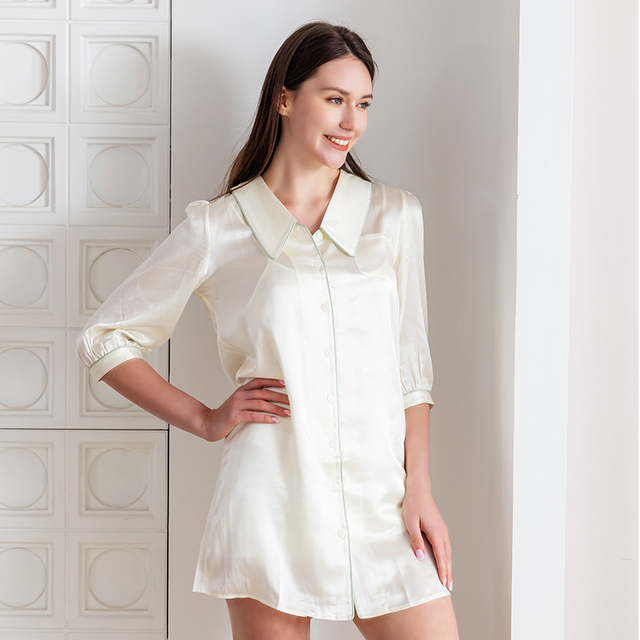
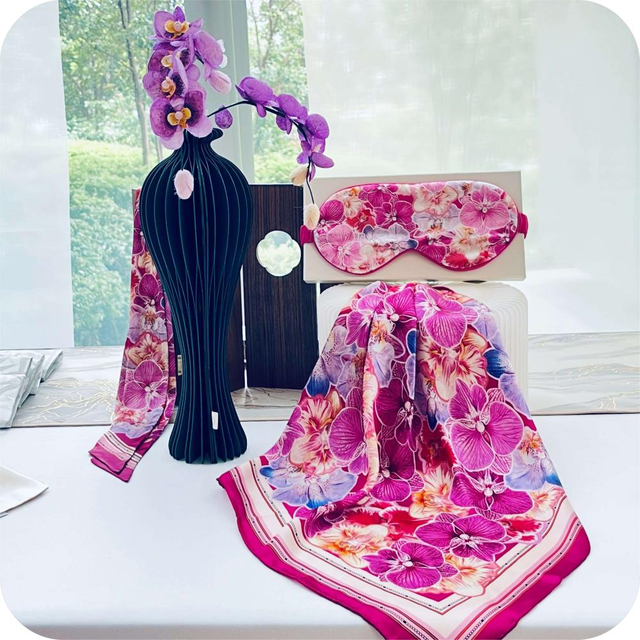
If you are sourcing hypoallergenic silk products for your own label, we manufacture silk pillowcases, bedding sets, comforters, sleepwear, and silk accessories in 19/22/25 momme 6A mulberry silk, OEKO-TEX Standard 100 certified, with custom logo, colour, size, and packaging. MOQ starts from 100 pieces per colour, samples ship within about 7 days, and we welcome third-party inspection.
Request a quote or order samples, or read our wholesale silk sourcing guides for MOQ, sampling, and lead time detail.