
Views: 0 Author: Kathy Ye Publish Time: 2026-10-29 Origin: https://taihusnow.com/


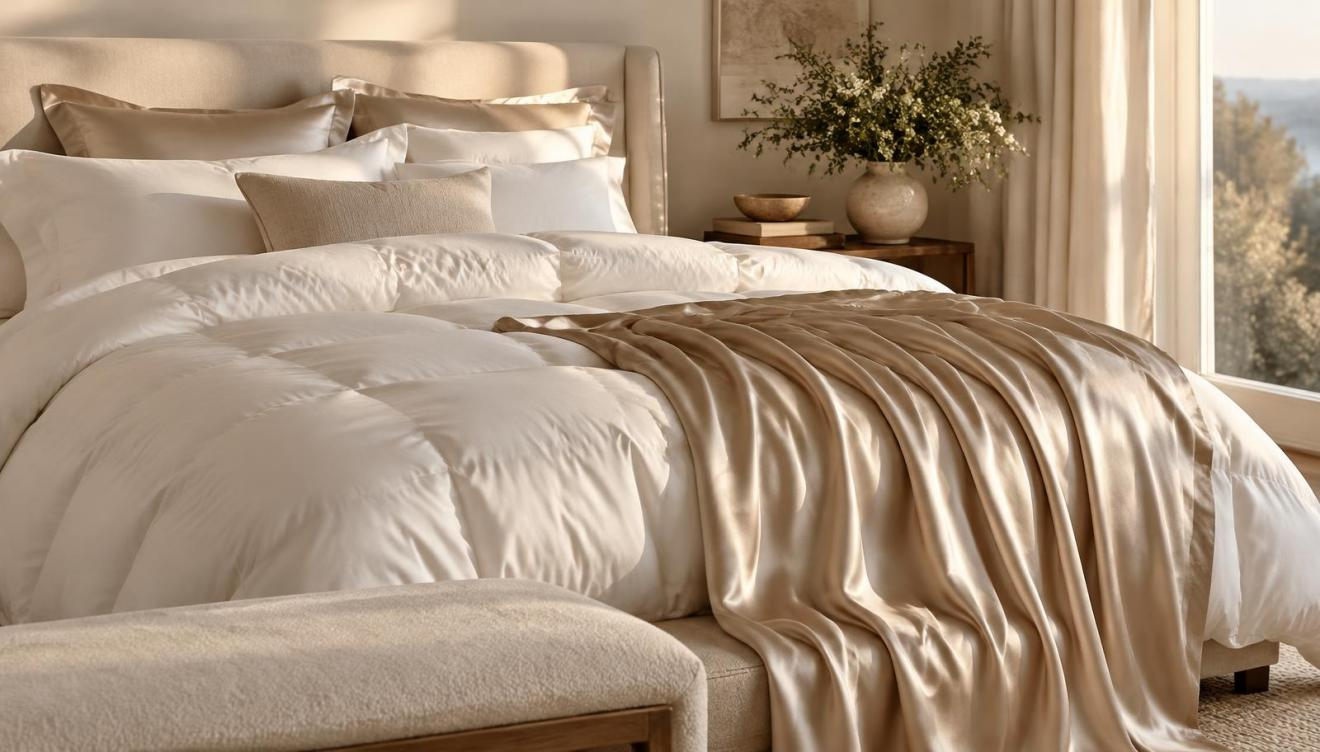
A silk throw is a lightweight top layer for flexible, moderate coverage, while a silk comforter is a filled bedding layer designed to provide more consistent overnight warmth. For brands and buyers, they should be specified as different products rather than treated as interchangeable silk bedding.
The practical distinction comes down to construction: a throw is usually a woven or knitted textile, whereas a silk comforter contains layered fiber fill inside a shell. A silk duvet may describe the same filled product when it is made to be used inside a removable cover.
For OEM, wholesale, and hospitality programs, selecting the right format affects material consumption, packaging volume, care instructions, price positioning, and customer expectations.
A silk throw adds a light, decorative, and easily movable layer, while a silk comforter is a primary sleep covering with an enclosed fill. A duvet insert is generally the same functional category as a comforter, but is intended to be protected by a duvet cover.
The terminology can vary by market, so purchase orders should define the construction rather than rely only on product names.
Product | Typical construction | Main use | Cover required | Key sourcing focus |
Silk throw | Woven, knitted, quilted, or lightly padded textile | Sofa, bed accent, travel, light layering | Optional | Fabric weight, weave, fringe or hem finish |
Silk comforter | Fiber-filled shell, usually quilted or anchor stitched | Primary sleeping cover | Optional but recommended | Fill type, fill amount, shell, warmth level |
Silk duvet / silk duvet insert | Fiber-filled insert made for a duvet cover | Primary sleeping cover | Usually expected | Corner loops, dimensions, shell durability |
Silk-filled blanket | Lightly filled, flatter quilted layer | Transitional or summer bedding | Optional | Low fill weight, drape, washability |
A throw may use silk on the face, in a blend, or as a decorative fabric. It is not automatically a silk-filled product. Conversely, a silk-filled comforter may have a cotton shell and contain little visible silk on its exterior. These are distinct specifications with different value propositions.
A throw is usually measured by fabric GSM, finished dimensions, hem construction, and visual design. It may be plain dyed, printed, jacquard woven, quilted, or finished with fringe.
For a premium collection, buyers should define whether “silk throw” means 100% silk fabric, a silk-and-cotton blend, or a textile with a silk-facing layer. This prevents a common mismatch between a merchandising brief and the delivered item.
The intended use also matters. A decorative throw needs attractive drape and color consistency; a bed-layering throw requires sufficient width and stable finishing after repeated handling.
A silk comforter is defined primarily by its silk fill, shell construction, and target warmth. Its outer fabric is commonly a breathable cotton shell, while the inside consists of stretched, layered fibers rather than loose clusters.
For a mulberry silk duvet, long-fiber silk is typically hand stretched into broad layers. The layers are stacked to create an even fill, then secured with limited anchor stitching or perimeter construction. This approach preserves the characteristic close drape of silk duvets without heavily compartmentalizing the fill.
A duvet and comforter may be sold under different names, but buyers should specify whether the finished comforter needs corner ties or loops for use inside a duvet cover.
A silk comforter is generally warmer than a silk throw because it contains substantially more insulating material across the full bed surface. The appropriate choice depends on bedroom temperature, mattress size, layering habits, and whether the sleeper prefers close drape or lofty volume.
Silk offers a relatively smooth, body-following layer rather than the cloud-like profile often associated with high-loft down. It can feel warm without excessive bulk when the fill is evenly distributed.
For silk-filled bedding, fill weight is more useful than down-style fill power. Fill power measures the loft of down; it does not describe the thermal performance of continuous silk layers.
A supplier quotation should show at least:
· Finished size in centimeters and inches
· Shell fabric composition, weave, and fabric weight
· Fill material, such as mulberry silk fill
· Net fill weight by size
· Total finished product weight
· Stitch or anchor stitching layout
· Target season or warmth level
· Packaging method and compressed carton dimensions
A summer duvet uses a lighter fill amount and is suitable for warm rooms, hot sleepers, or markets where customers layer bedding. An all-season option carries more fiber, while a winter version uses a heavier silk fill to increase insulation.
There is no universal “best” fill amount. A lighter silk insert can be the right product for air-conditioned climates, while a heavier silk comforter suits cool rooms or consumers who do not use additional blankets.
A throw lies relatively flat and can be folded or removed easily. A silk comforter has more volume, but its layered construction creates a closer drape than many down-filled alternatives.
This difference is commercially important. Consumers looking for a tailored bed profile may prefer the flatter drape of a silk-filled insert, while those seeking a visibly lofty, hotel-style bed may expect more expansion from down or synthetic fill.
When comparing silk vs down, communicate the feel honestly: silk does not need to mimic down to perform well. It offers a distinct combination of fluid drape, even coverage, and low-bulk warmth.
A lightweight silk duvet can be a strong year-round option for hot sleepers because the fill is breathable and can be specified at a lower weight. It should not, however, be presented as universally cool or universally warm regardless of room temperature and fill level.
The properties of silk are best understood as moisture management and temperature comfort characteristics, not as a fixed seasonal label. A warm sleeper in a heated apartment may need a summer-weight insert; a cold sleeper in an unheated room may need a winter-weight version.
Importers and brand teams should build a small warmth architecture instead of offering one generic comforter across all regions.
Room and user profile | Recommended product direction | Commercial note |
Warm climate or air-conditioned room | Summer duvet with light silk fill | Suitable for lightweight bedding programs |
Moderate indoor temperature | Mid-weight silk duvet | Broadest year-round positioning |
Cool room or cold sleeper | Higher fill weight silk comforter | Confirm customer expectations on weight and warmth |
Decorative layering program | Silk throw or lightly padded throw | Prioritize texture, finish, and color assortment |
Premium duvet-cover program | Silk duvet insert with corner loops | Include cover compatibility in size development |
The shell affects performance as well. Breathable cotton is a practical choice for a silk insert because it protects the fill while allowing moisture to move through the bedding system. A dense synthetic shell may alter the hand feel and reduce the natural character of the finished product.
For customers comparing silk comforter vs down comforter, down typically offers greater loft for its weight, while silk provides a more body-conforming structure. Both silk and down comforters are animal-derived products, but their construction, care needs, and visual appearance differ considerably.
A quality silk comforter should use clearly declared fill, sufficient long fibers, an appropriate shell, and stable construction that keeps the filling evenly distributed. “Silk” on a label alone does not confirm the type, percentage, or arrangement of the fill.
For premium positioning, specify pure mulberry silk rather than vague descriptions such as “natural fiber” or “silk blend.” A pure mulberry silk duvet insert should also state that the fill contains no synthetic blend or filler fiber if that is the intended claim.
A robust specification sheet should distinguish among these descriptions:
· Silk shell: silk fabric on the exterior; does not confirm what is inside.
· Silk blend: contains silk with another fiber; the percentage must be stated.
· Silk-filled comforter: contains silk in the filling; the shell must be specified separately.
· Mulberry silk fill: identifies the silkworm source category but should still be paired with a fill percentage.
· Double-cocoon mulberry silk: a fiber selection often used for longer, stronger filaments in hand-stretched silk layers.
Good silk fill should form broad, resilient layers rather than short, loose fibers that can migrate or clump. A supplier can support evaluation with a silk viewing window, a small unstitched inspection area, or material samples before bulk production.
A viewing window is useful only when it represents the actual fill used throughout the order. Buyers should also request a finished sample in the approved shell, because shell density, stitching, and fill distribution affect the final hand feel.
The corner and edge construction must be strong enough to withstand handling, especially where a duvet cover is used and changed frequently. Corner loops should be securely sewn, sized for common tie systems, and tested on the finished comforter rather than approved only as a component.
Too much quilting can interrupt the natural drape of silk fibers. Too little stabilization can allow the fill to shift during use. The right balance depends on fill weight, bed size, and the intended product position.
At Taihu Snow Silk, OEM/ODM development can begin with the commercial brief—target warmth, dimensions, shell hand feel, labeling, and packaging—then translate those requirements into an approved sample and bulk specification. This is more reliable than selecting a fill weight from a generic catalog without considering the target market.
A silk throw may be washable according to its fabric construction, but a silk comforter should usually be protected with a removable duvet cover and cleaned only when necessary. Care labeling must follow the finished product’s shell, fill, dyes, trims, and tested wash performance.
A duvet cover helps protect the silk from body oils, spills, and frequent abrasion. For most filled products, regular airing in a shaded, dry place and spot cleaning of the shell are preferable to repeated full washing.
Do not apply one care instruction to every silk product. A machine-washable throw, a washable silk-filled blanket, and a high-value hand-layered duvet insert may each require different instructions.
For a filled comforter, common risk points include:
· Wringing or twisting, which can disturb layered fill
· High-heat tumble drying, which can damage fibers and shell finishes
· Saturating the entire insert without sufficient drying capacity
· Aggressive detergents, bleach, or prolonged soaking
· Storing the product in damp or sealed conditions
Where home washing is not validated, advise professional dry cleaning or gentle hand washing only when appropriate for the tested construction. If a product can be gently hand washed in cool water, the instructions should also state drying method, reshaping guidance, and whether flat drying is required.
For wholesale programs, it is wise to develop care labels, hangtags, and online care copy together. Inconsistent advice—such as “machine washable” on an ecommerce page and “dry cleaning” on the sewn label—creates preventable returns.
Silk comforters can justify a premium position when fill quality, construction, and seasonal specification are clear, but they are not a substitute for every bedding format. Buyers should build their assortment around use case, target retail price, and the degree of care support their customers will accept.
Silk comforters are often selected for sensitive-skin and allergy-conscious customers because silk fibers are smooth and the enclosed fill does not create the same loose, lofty structure as down. However, no bedding product should be marketed as a medical treatment or as universally allergy-proof.
For this segment, focus on clear fiber declarations, clean manufacturing controls, a protective duvet cover, and care guidance that helps customers maintain a hygienic sleep environment. The cotton shell can still collect surface dust over time, which is one reason a washable cover remains valuable.
Silk comforters and down comforters suit different preferences. Silk is a strong choice for customers who value close drape, low-bulk warmth, and a fiber-layer construction; down may suit those who prioritize high loft and compressibility.
Down products should identify down content, fill power, and relevant sourcing requirements such as the Responsible Down Standard where applicable. A comparable silk product should identify silk type, fill weight, shell specification, and construction method. The better option is the one that makes its performance claims measurable.
A duvet cover can slightly change the hand feel and add a minor layer, but it does not turn a summer-weight duvet into a winter bedding product. Choose the right insert first, then select the cover fabric for comfort, appearance, and protection.
Cotton or linen covers are common choices for a silk duvet because they are breathable and can be laundered more frequently. For premium sets, ensure that cover dimensions allow for the expected drape of the insert without excessive empty space.
A well-made silk comforter can remain in service for years when it uses stable long-fiber fill, a durable shell, limited but effective anchoring, and a protective cover. Longevity is reduced by poor storage, frequent untested washing, thin shell fabric, or insufficient fill stabilization.
Before placing a bulk order, request a pre-production sample, confirm finished dimensions and three listed weight points—shell, fill, and total weight—and approve the care label with the final construction. These steps reduce ambiguity far more effectively than relying on broad descriptions such as “luxury silk bedding.”
For a silk throw vs silk comforter collection, the next step is to define the target season, dimensions, shell fabric, fill specification, and packaging requirements with Taihu Snow Silk’s OEM/ODM team before sampling.