Views: 0 Author: Kathy Ye Publish Time: 2026-11-13 Origin: https://taihusnow.com/


Start with dry hair. Smooth it toward the nape, open the bonnet with both hands, and place the front edge near your hairline. Pull the bonnet back over your head, tuck the ends inside loosely, and adjust the band so it feels snug and comfortable.

The best way to put on a bonnet is to place the hair in a low-tension arrangement first, then secure the bonnet around the hairline without pulling the lengths upward too tightly. The technique should keep the hair straight while avoiding a visible bend or dent.
Follow this step-by-step guide before bed:
1. Start with dry hair. Gently detangle from the ends upward.
2. Smooth your hair toward the nape. Leave short hair down and gather longer lengths loosely in one hand.
3. Keep the lengths loose. A tight ponytail, high bun or compact twist can leave a bend or flatten the roots.
4. Hold the opening wide with both hands. Set the front edge near your hairline.
5. Slide the bonnet back over your crown toward the nape. Tuck the ends inside with one hand as you guide the cap into place.
6. Check around the band. Free any strands caught under the edge and arrange long ends in a loose curve.
7. Adjust the band until it feels snug. If it presses into your forehead or ears, loosen it or try a different fit.
8. Lie down briefly and check the fit. Reposition the band if it shifts or pushes your fringe or roots into a ridge.
If your ends tangle easily, you can try one loose braid. It may leave a soft wave, so leave the lengths loose inside a deeper cap if you want to preserve a straight finish.
Guide long hair into the cap in a loose curve, keeping the ends clear of the band. The long mulberry silk bonnet measures 58 cm from the top of the cap to the bottom. Ask for the opening measurement separately when checking fit.
Do not force long lengths into a shallow cap. A too-small hair bonnet may crease the mid-lengths, strain seams, and make the elastic shift upward during the night. For brands, this is a common reason to include crown depth and recommended length range in product specifications.
Yes. A bonnet keeps your lengths contained and gives your hair a smooth surface to rest against. It may help limit tangling from overnight movement, especially at the ends.
Look for a smooth interior, enough room for your hair length and a band that sits comfortably. A shallow cap can crowd long hair, while a loose opening may shift overnight.
Mulberry silk is a fiber. Satin is a weave that can be made from silk, polyester or other fibers. Check the label to see what touches your hair, especially if the outer fabric and lining differ. Read the silk and satin fabric comparison for more detail.
For short straight hair, start with a standard or smaller cap. Smooth the hair toward the nape and check that the cap feels stable when you lie down.
For shoulder-length or long hair, look for a deeper cap or longer profile. Check that the ends fit inside in a loose curve.
If your bonnet slips, first check the opening and the cap depth. A loose opening may shift when you turn, and a shallow cap can be pushed up by the hair inside.
If the band leaves a dent, loosen it or try a different closure. If the dent is in the lengths, release any tight tie or twist and tuck the ends into a deeper cap.
Use these adjustments before replacing a product that slips:
· Select a smaller circumference or an adjustable design.
· Place the edge behind the ears where comfortable, rather than balancing it too high.
· Ensure all hair is inside; escaped hair can pull the cap upward.
· If the opening keeps slipping, compare covered elastic and adjustable ties in the silk bonnet collection.
A pillowcase gives the hair a smooth surface where it touches the pillow, and a bonnet also keeps the lengths contained. See the silk bonnet and pillowcase comparison to compare the two.
For a straight finish, let your hair dry before putting on the bonnet. Damp lengths can dry in the shape they were tucked into, leaving bends or uneven volume.
A bonnet can help preserve the style you already have by containing the hair while you sleep. The way you tuck the lengths affects whether you wake up with bends or waves.
For a blowout or flat-ironed finish, choose a cap with enough room to keep the lengths loose.
You can wear a bonnet nightly if it fits comfortably. Wash it according to the care label, adjusting the frequency for styling product and oil buildup.
Follow the care instructions for the finished product. See how to wash a silk or satin bonnet for washing and drying guidance.
If you are buying for a brand or retailer, request samples for the hair lengths you plan to serve. Check the following before you approve a style.
Specification | Best use | Sourcing consideration |
Mulberry silk exterior and interior | Premium sleep and beauty accessory collections | Confirm silk grade, fabric weight, colorfastness, and care-label requirements |
Silk-lined construction | Products balancing premium contact surfaces with a different outer material | Specify the fiber content of each panel. |
Polyester satin | Value-priced and promotional assortments | Verify hand feel, static tendency, stitch quality, and clear fiber disclosure |
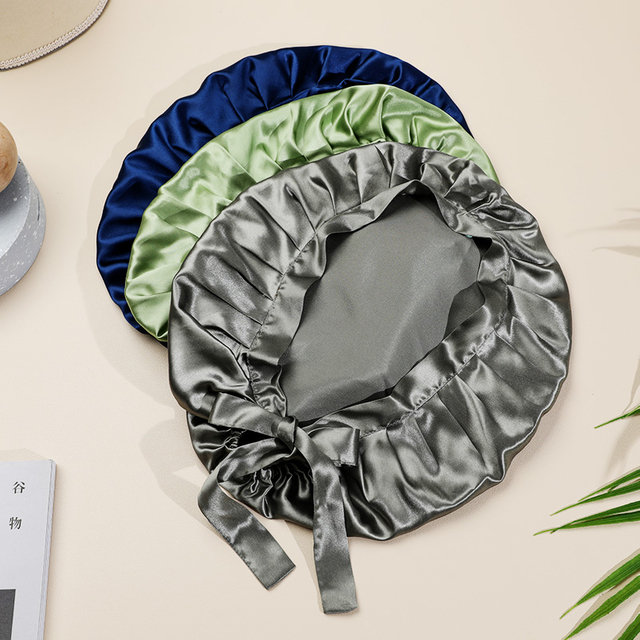
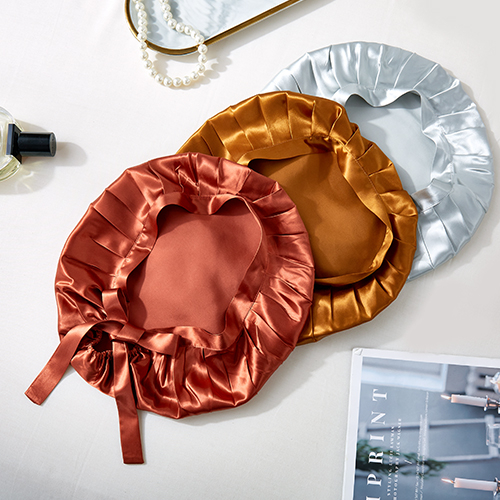
Adjustable drawstring or tie | Customers needing customizable fit | Test that ties do not loosen, snag hair, or create pressure |
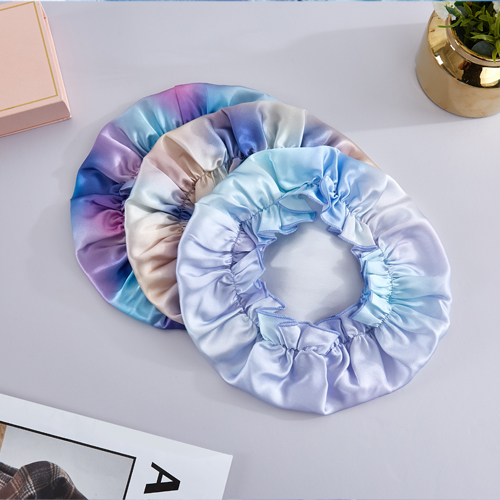
Covered elastic band | Broad consumer fit and easy daily use | Confirm tension after repeated stretching and washing |
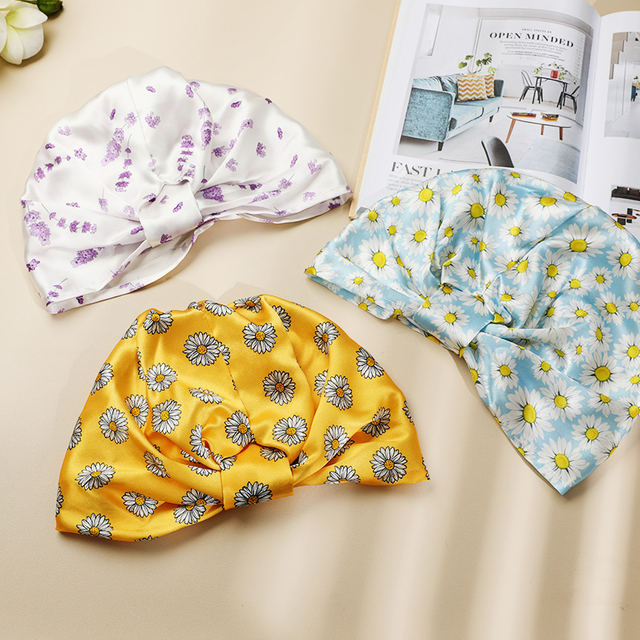
Oversized crown | Long hair, thick hair, protective styles, and hairdos | Ensure extra volume does not cause excess shifting overnight |
Also check seam placement, elastic recovery, stitching, wash performance and label legibility. Confirm MOQ, lead time and quality checks for the chosen style.
Try the finished sample with short, shoulder-length and long straight hair where those lengths are part of your range. Record the cap measurements and band fit so your product listing can explain who each size suits.
For private-label sampling, request a custom bonnet quote with your target fabric, size range, branding, packaging and estimated order volume.