Views: 0 Author: Kathy Yee Publish Time: 2026-05-21 Origin: https://taihusnow.com/


For small beauty, hair, and bedding brands, sourcing silk pillowcases from a Chinese manufacturer can feel confusing at first. Prices, MOQs, lead times, and shipping options all change depending on your fabric choice, order size, and destination country.
This guide explains what you can realistically expect when working with an OEM & ODM silk factory like Taihu Snow Silk, so you can budget your project and plan your launch timeline with confidence.
If you already know you want to work with a Suzhou factory, you can also look at our overview of Suzhou silk factory buy online to understand how we work with global brands.
Wholesale pricing for silk pillowcases is mainly driven by three factors: silk weight (what is momme silk), order quantity, and product complexity (such as special packaging or trims). Instead of one fixed number, it is more useful to think in price ranges for different MOQ levels.
If you want a deeper cost breakdown and examples, check our dedicated guide on silk pillowcase wholesale pricing. For a broader perspective on raw material cost, you may also find it helpful to read about how much silk costs.
For most small brands, the typical pattern looks like this:
• For 19 momme mulberry silk pillowcases, prices are usually at the entry-level range among premium options. As your order moves from the minimum order quantity to a few thousand pieces, the unit price can drop significantly because fabric usage and production become more efficient.
• For 22 momme mulberry silk pillowcases, expect a mid-range wholesale price. This is the “sweet spot” for many beauty and bedding brands because it balances luxury feel, durability, and cost. The price range is normally a bit higher than 19 momme, but still very competitive as your quantity increases.
• For 25 momme mulberry silk pillowcases, prices are in the premium range. You are paying for thicker fabric, better drape, and a longer product life. The cost difference compared with 22 momme is more noticeable at low MOQs, but becomes more cost‑effective at higher volumes.
In practice, the higher your quantity, the closer you move toward the lower end of each price band. When you request a quote, be prepared to share:
• The target momme (19/22/25)
• Your approximate quantity tiers (for example: 200, 500, 1,000+ pieces)
• Any extra requirements (special zippers, piping, branded labels, gift boxes)
With this information, a factory can offer a clear price ladder, so you see how the unit price changes when you scale up.
If you already have a target FOB budget and need OEM support, you can send your brief directly to our silk pillowcase manufacturer team or start from the wholesale silk pillowcase product page and request a quotation.
Most small brands want multiple colors, sizes, or both in one order. This is possible, but there are some basic rules that protect production efficiency and keep your cost reasonable.
Typical logic for mixing colors and sizes:
• There is usually a minimum starting quantity per color or size. For example, a factory may allow you to mix several colors as long as the total quantity per color meets a small internal threshold.
• From the factory side, each color and each size involves separate cutting, sewing adjustments, and packing. More variations mean more line changes, which slightly reduce efficiency.
Cost impact when mixing:
• If you stay within a reasonable number of colors and sizes, and the total quantity is still healthy, the price may remain close to the base wholesale rate.
• If you request many colors and sizes with very low quantities per variant, you should expect a small surcharge or a higher unit price to cover extra handling, material loss, and time.
• A common approach for small brands is to choose one or two “hero” sizes (for example: standard and queen) and a focused color palette for the first order. After validating the market, you can expand the color range in later orders, when your total volume is higher.
If you are still selecting sizes, this pillowcase size guide and overview of pillowcase closure types can help you decide which options fit your market and packaging style.
When asking for a quote, it helps to send a clear breakdown like:
“Total 500 pieces: 300 pieces in size Standard, 200 pieces in size Queen; 3 colors, with each color at least 100 pieces.”
This allows the factory to check whether mixing is feasible without a large cost increase.
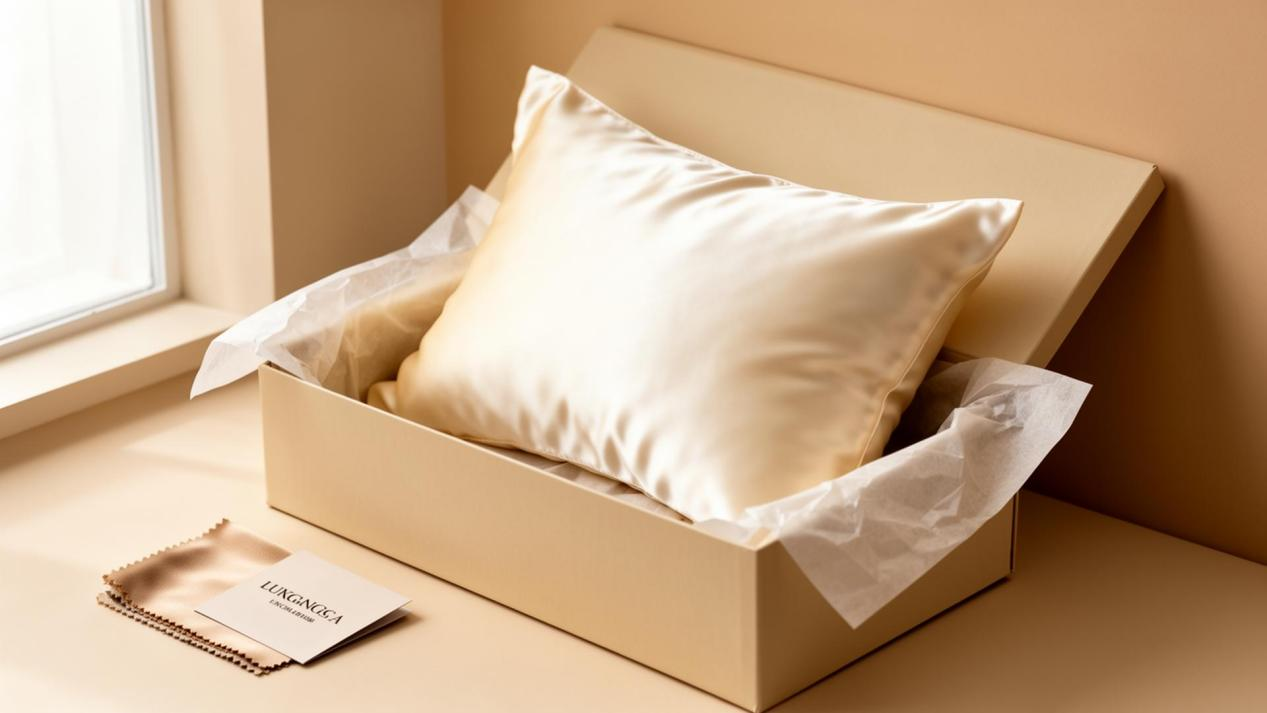
Sampling is a key step before any wholesale order. It protects both your brand and the manufacturer by aligning on fabric quality, color, workmanship, and packaging details.
How sampling fees usually work:
• For a first‑time project, the factory often charges a sample fee that covers fabric, labor, pattern making, and sometimes customized packaging.
• The fee is typically kept at a reasonable, symbolic level and may vary depending on whether you need standard models or complex customization (for example, special embroidery, custom print, or unique packaging).
If you need very specific branding, working with a dedicated custom silk pillowcase team can speed up this process because they already have templates for labels, embroidery positions, and gift boxes.
In many cases, there is a clear refund logic:
• If you confirm a bulk order after approving the sample, the sample fee can be credited back in one of two ways:
○ Deducted from the bulk order invoice; or
○ Refunded directly after the bulk order is placed and paid.
• If you do not place an order after sampling (for example, you are still comparing multiple suppliers), the sample fee is normally non‑refundable, because the factory has already invested material and labor time.
A transparent sampling policy helps you plan your budget. When you request samples, ask the supplier to explain:
• The exact sample fee for your project
• Whether the fee is refundable and under what conditions
• The expected sampling lead time
Lead time for silk pillowcases is best viewed as a simple model:
Sampling x weeks + Production x weeks + Shipping time
For a professional silk manufacturer, the steps usually look like this:
1. Sampling phase
○ Pattern making, fabric preparation, sewing, finishing, and quality checks.
○ This phase often takes around 1–3 weeks, depending on fabric availability and customization details such as printing or embroidery.
2. Bulk production phase
○ Once you approve the sample and pay the deposit, the factory arranges fabric, dyeing, cutting, sewing, inspection, and packing at scale.
○ For small to medium MOQs, production commonly takes around 3–6 weeks, depending on order size, product complexity, and current factory load.
3. Shipping phase (sea freight or air freight)
○ After production is finished and final inspection is done, the goods are shipped according to your chosen method.
○ Shipping time varies widely by country and by mode of transport.
When you plan a new product launch or a seasonal campaign, always work backward from your target launch date. Add buffer time for:
• Sample revisions (if you want any changes)
• Holiday periods or peak production seasons
• Customs clearance and local delivery in your country
If you are completely new to importing from China, our silk pillowcase import guide explains documentation, duties, and common compliance points in more detail. For a higher‑level view of where silk is produced and sold globally, see the article on the silk textile market.
For silk pillowcase wholesale, the best logistics solution depends on your order volume, urgency, and destination. Instead of focusing on specific freight forwarders, it is more useful to understand the general logic by region and shipping mode.
Basic decision logic:
• For urgent, small‑to‑medium shipments, air freight or express service is usually preferred. You pay a higher price per kilogram, but your goods arrive much faster, which is ideal for first launches, restocks before a promotion, or samples for marketing campaigns.
• For larger, planned shipments, sea freight is usually the most cost‑effective solution. Transit time is longer, but the cost per unit drops significantly, which helps your profit margin once your sales volume grows.
Different country patterns:
• For North America and Europe, brands often start with air shipment for their first small order to test quality and market response. Once sales are stable and order size increases, they switch to sea freight for the main stock and keep a smaller volume by air for urgent replenishments.
• For neighboring Asian markets, there are more flexible combinations of air, sea, and sometimes land routes. Because transit distance is shorter, both air and sea options can be attractive, depending on your timeline and budget.
• For regions with complex import rules or limited direct routes, working with a manufacturer that has experience shipping to your country is crucial. They can suggest a practical route plan that balances customs compliance, speed, and cost.
No matter where you are, the ideal approach is:
• Use faster shipping for first orders and time‑sensitive campaigns.
• Use slower but cheaper shipping for regular replenishment once your demand is predictable.
When discussing logistics with your supplier, share your timeline, budget expectations, and whether you prefer door‑to‑port or door‑to‑door service. This helps them recommend a realistic shipping plan that fits your brand stage.