Views: 0 Author: Emma Publish Time: 2026-01-22 Origin: https://taihusnow.com/


When you compare modal vs rayon, you see clear differences in origin, processing, and performance. Both belong to the same fiber family, yet each fabric behaves in specific ways that affect comfort, care, and cost.
These facts help you choose the right textile for daily wear or special garments.
Rayon began in the late 1800s as an artificial silk and a cheaper than silk option. Manufacturers created it to copy silk or cotton using a regenerated fiber made through a chemical process.
This history explains why rayon fabrics still appear in many fast fashion items and classic apparel. Modal came later as a stronger form of rayon.
Modal is a type of rayon, often called HWM rayon, designed to improve strength and softness. Manufacturers create modal rayon to handle stress and washing better.
You often see it in loungewear and basics where comfort matters. History shows that modal refined what rayon started.
Both modal and rayon count as semi-synthetic fibers. They start with regenerated cellulose taken from plants, not oil like polyester.
Rayon production usually relies on wood pulp, while modal fabric made today often uses beech tree pulp from beech trees. This makes modal a type of rayon using beech.
Rayon made through the viscose process remains the most common type of rayon. Some versions include bamboo rayon or bamboo viscose, which still follow similar steps.
Modal fabric made by Lenzing uses controlled fabric production from sustainably harvested forests. This approach can lower environmental impact, though making rayon uses a lot of water.
This comparison comes from Taihu Snow Silk, a Suzhou-based mulberry silk manufacturer founded in 2002. As a publicly listed producer (Stock Code 920262) making real 6A mulberry silk, we'll give you an honest, manufacturer's-eye view of the differences that actually matter. We produce silk pillowcases, bedding, and accessories for brands in 50+ countries.
You notice the feel of modal right away. Modal retains softness, shows a silky texture, and stays smooth even after multiple washes.
It resists shrinkage, wrinkle issues, and pilling, and modal retains shape better than standard rayon. Modal also offers moisture-wicking comfort and helps wick sweat, which keeps you cool and comfortable.
Rayon fabric feels soft and drapey, with a fluid drape that works well for a rayon dress or dresses and blouses. It remains breathable but can weaken when wet and wrinkle more easily.
Quick comparison
| Feature | Rayon | Modal |
|---|---|---|
| Fiber type | Regenerated fiber | Form of rayon |
| Strength | Lower when wet | Stronger, even when wet |
| Care | Needs gentle care | Easy to care |
| Typical use | Apparel, rayon fabrics | Loungewear, underwear |
| Cost | Lower fabric cost | Slightly higher |
You see clear differences in feel, strength, and care when you compare modal and rayon. Those differences start at the source and continue through each step of fabric production, from pulp to finished textile.
Rayon begins with plant material, most often wood pulp. Makers dissolve the pulp with a chemical process to turn it into a liquid.
They then spin it into a fiber and dry it into yarn. This process creates a semi-synthetic fabric that looks and feels like natural fibers.
Modal follows a similar path, but makers use beech tree pulp from beech trees. Using beech helps control quality and strength.
Some producers, like Lenzing, source pulp from sustainably harvested forests. This approach can lower the environmental impact when factories manage water and chemicals well.
Rayon production also includes bamboo rayon, bamboo viscose, and viscose rayon. Each starts with plants but varies in control, cost, and results.
Both fabrics rely on cellulose fibers, which come from plants. Makers dissolve the cellulose and reform it as regenerated cellulose.
Cellulose gives rayon fabrics their drape, breathability, and softness. It also explains why rayon feels like an alternative to silk and works as artificial silk, yet stays cheaper than silk.
The silky texture suits a rayon dress, dresses and blouses, and light apparel. Modal uses tighter control over cellulose chains.
That control makes modal stronger and more stable. Modal retains shape, resists wrinkle and shrinkage, and stays soft and smooth even after multiple washes.
The differences between modal and rayon come from how factories refine the pulp and spin the yarn. Viscose uses an older viscose process that can be harmful to the environment if poorly managed and uses a lot of water.
Viscose production often costs less, which affects fabric cost. Modal uses added steps that increase strength and reduce pilling.
Some versions, like hwm rayon or a type of rayon using beech, improve wet strength and care.
| Aspect | Rayon | Modal |
|---|---|---|
| Base | Rayon made from plants | Rayon using beech trees |
| Strength | Weaker when wet | Stronger and stable |
| Care | Can wrinkle | Easy to care |
| Use | Rayon fabrics for fashion | Loungewear and basics |
You may also see lyocell and tencel, made from eucalyptus, or blends like a modal blend with polyester. These choices affect moisture-wicking, how fabric can wick sweat, and the feel of modal versus standard rayon.
Modal and rayon both shape how a garment feels, moves, and performs in daily wear. Their differences come from fiber structure, wet strength, and how each textile handles moisture, wear, and movement.
You notice the softness of modal as soon as you touch it. Modal fabric made from beech tree pulp feels soft and smooth against your skin.
It keeps that feel even after multiple washes because modal retains its shape and surface. Rayon fabric also feels soft, but the feel changes by type of rayon.
Viscose, bamboo rayon, cupro, and hwm rayon each handle wear in different ways. Many rayon fabrics feel like silk or cotton, which makes rayon an alternative to silk that is cheaper than silk.
Modal is a form of rayon, but it has higher wet strength. That strength lowers shrinkage and helps with resistance to pilling.
Rayon can feel comfortable at first, but some types lose softness faster with regular washing.
Both fabrics start with cellulose fibers, so they allow airflow. Rayon fabric stays breathable and cool and comfortable in warm weather.
You often see rayon dress styles because rayon using beech trees or bamboo drapes well and feels light. Modal goes further with moisture-wicking performance.
It can wick sweat away from your skin and dry faster. That makes modal popular in loungewear and apparel worn close to your body.
Rayon production affects performance. Some viscose production uses a chemical process that uses a lot of water and can be harmful to the environment.
Newer options like tencel and lyocell, often made from eucalyptus, focus on lower environmental impact and more eco-friendly fabric production.
Drape plays a big role in how clothing looks on your body. Rayon made from wood pulp creates a soft and drapey shape that flows well.
You often see this quality in dresses and blouses, especially a rayon dress with a fluid cut. Modal vs rayon shows clear differences here.
Modal has a silky texture with more structure. It resists wrinkle better and holds clean lines.
That helps with fitted tops and modal blend fabrics mixed with polyester for strength.
| Feature | Modal | Rayon |
|---|---|---|
| Drape | Drapey but stable | Very drapey |
| Texture | Silky texture | Soft and drapey |
| Durability | Resistant to pilling | Varies by type of rayon |
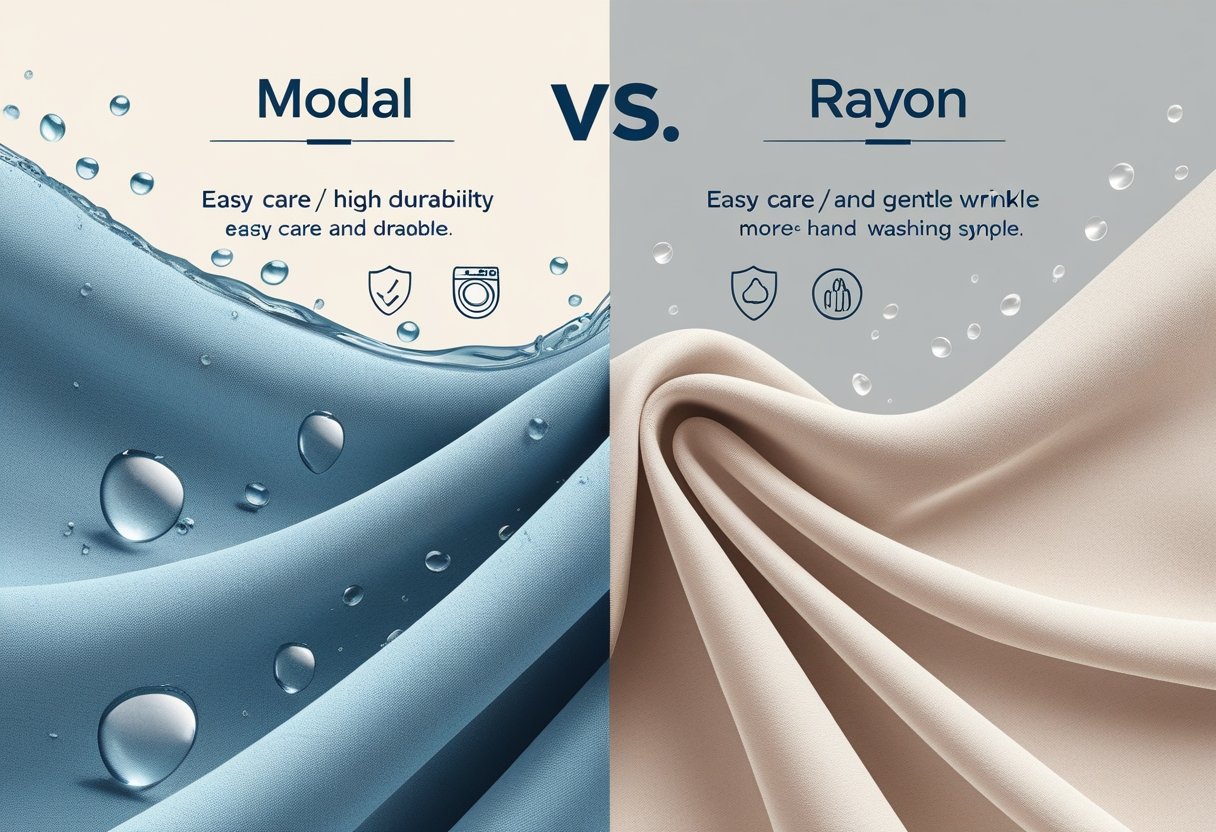
Durability and care create clear differences between modal and rayon. Wet strength, surface wear, and washing habits affect how each fabric performs over time.
These details matter when you choose apparel for daily use, travel, or long wear.
Wet strength separates modal vs rayon more than any other factor. Rayon weakens when wet, especially standard viscose, which is a common type of rayon.
Fibers can stretch, lose shape, or tear during washing. This issue often shows up in a rayon dress or lightweight garments.
Modal handles moisture better. Modal is a type of rayon using beech trees, and its fiber structure improves wet strength.
The fabric keeps its shape when damp and resists damage during washing. Lenzing helps refine this process, and makes modal from regenerated cellulose and beech tree pulp.
Lyocell and tencel also perform well when wet, similar to modal. Bamboo rayon and hwm rayon improve wet strength too, but standard rayon still falls behind.
This difference affects drape, wrinkle control, and long-term wear.
Shrinkage and surface wear affect how rayon fabrics age. Rayon shrinks more easily, especially after heat or agitation.
Poor care can change the size of a garment and reduce breathability. Rayon production creates a semi-synthetic fabric with low resistance to stress.
Modal resists shrinkage better and shows stronger resistance to pilling. The smoother cellulose fibers reduce friction, so fabric stays soft and smooth.
Modal retains color and shape even after multiple washes.
| Feature | Rayon | Modal |
|---|---|---|
| Shrinkage | Higher | Lower |
| Pilling | More likely | Resistant to pilling |
| Shape hold | Weaker | Stronger |
This quality makes modal popular for loungewear, dresses and blouses, and drapey styles that need consistency.
Care needs differ in daily use. Rayon requires gentle handling.
You should wash in cold water, avoid twisting, and air dry. Heat causes wrinkle issues and weakens fibers.
This fabric made from wood pulp uses a chemical process that leaves it sensitive to stress. Modal is easier to care for and more easy to care overall.
You can machine wash it on gentle cycles with less risk. Modal fabric made from beech tree pulp wicks moisture, stays highly absorbent, and feels cool and comfortable.
Both fabrics remain breathable and offer a silky texture, often seen as an alternative to silk or cotton. Still, modal and rayon respond differently to care, and modal blend options often add polyester for better durability and fabric cost control.
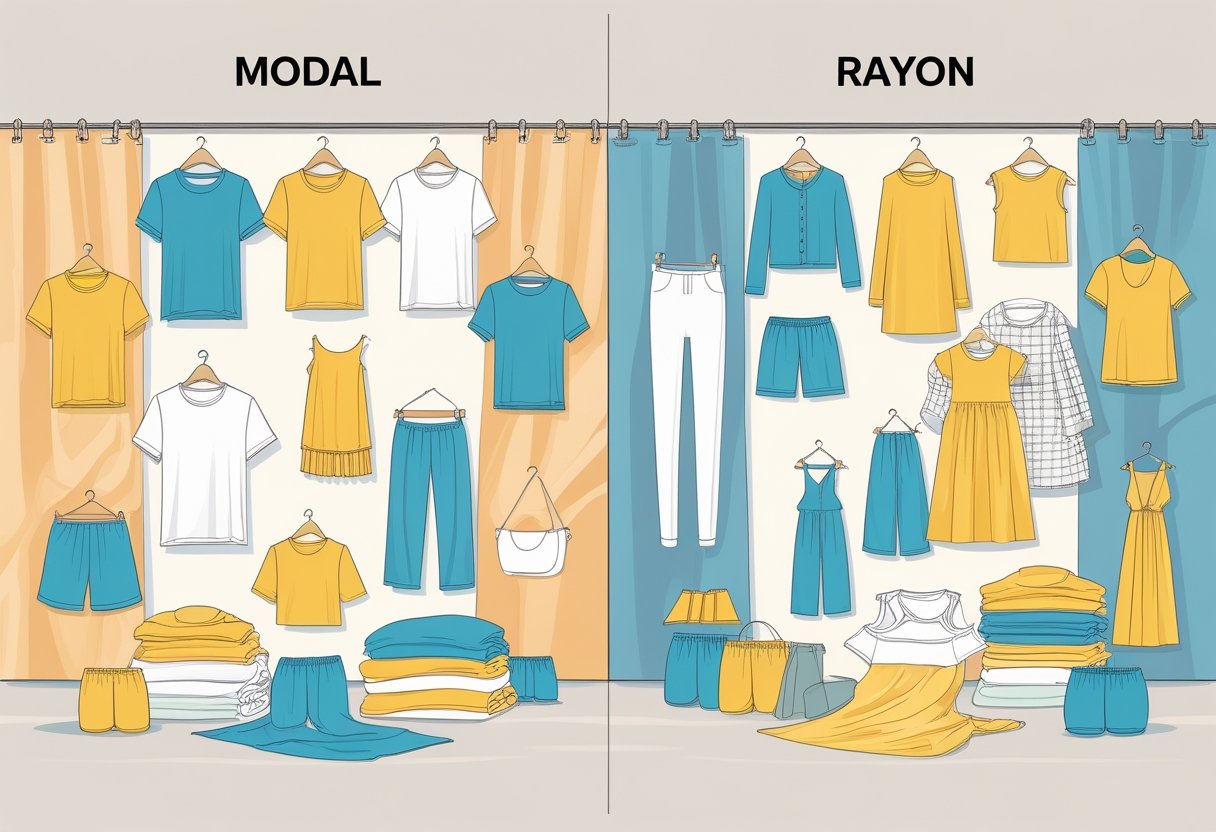
Modal and rayon both serve as a popular fabric in everyday products because they balance comfort, appearance, and fabric cost. You see clear differences in how modal vs rayon performs across apparel and home textile uses, especially in drape, durability, and care.
You often find rayon clothing in dresses and blouses, including a classic rayon dress for warm weather. Rayon fabrics work well because the fiber feels soft and smooth, stays breathable, and offers good drape.
Many brands use rayon made from wood pulp as an alternative to silk since it looks refined and remains cheaper than silk.
Modal is a form of rayon and a semi-synthetic fabric made from beech tree pulp. Modal fabric made from beech trees delivers consistent softness and a silky texture.
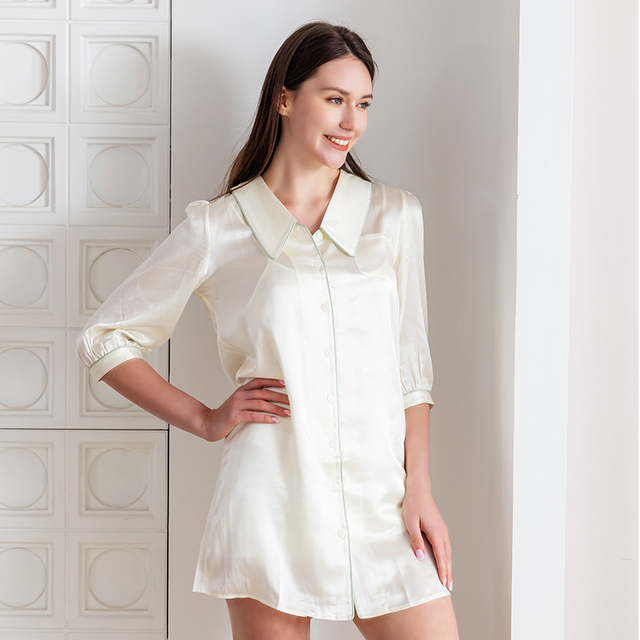
You see it often in underwear, loungewear, sleepwear, and fitted tops. Modal retains shape better and resists wrinkle and pilling even after multiple washes.
Common apparel uses
Rayon: dresses and blouses, lightweight shirts, skirts
Modal: loungewear, base layers, active tops
Modal blends: mixed with polyester for strength or cotton for structure
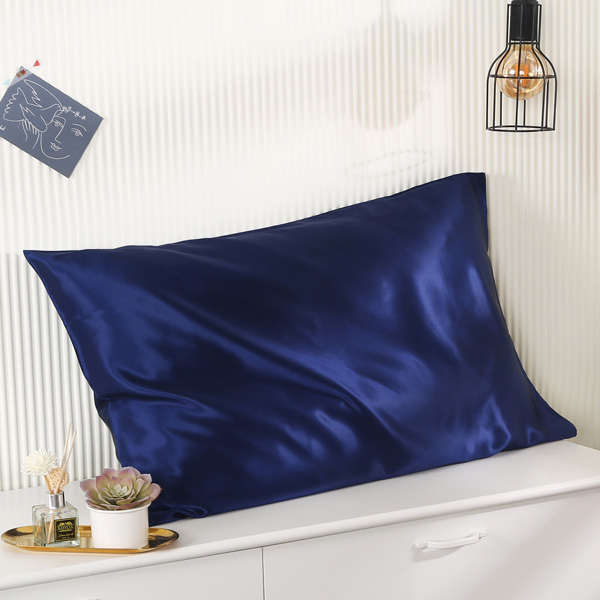
In home textiles, you benefit from rayon and modal when you want a soft and drapey textile that feels cool and comfortable. Rayon works well for sheets, curtains, and pillowcases because the regenerated cellulose fiber is highly absorbent and breathable.
Bamboo rayon and bamboo viscose also appear in bedding, though rayon production uses a chemical process that can increase environmental impact.
Modal and rayon blends improve performance in home use. A modal blend adds durability and moisture-wicking while keeping a luxurious feel.
Brands like Lenzing use controlled fabric production methods, including lyocell and tencel made from eucalyptus, to reduce waste.
| Material | Common Home Uses | Key Traits |
|---|---|---|
| Rayon | Sheets, curtains | Drapey, breathable |
| Modal | Bedding, covers | Softness, low shrinkage |
| Tencel / Lyocell | Sheets, duvets | Eco-friendly, smooth |
You choose between modal and rayon based on feel, care needs, and how long you want the fabric to last.
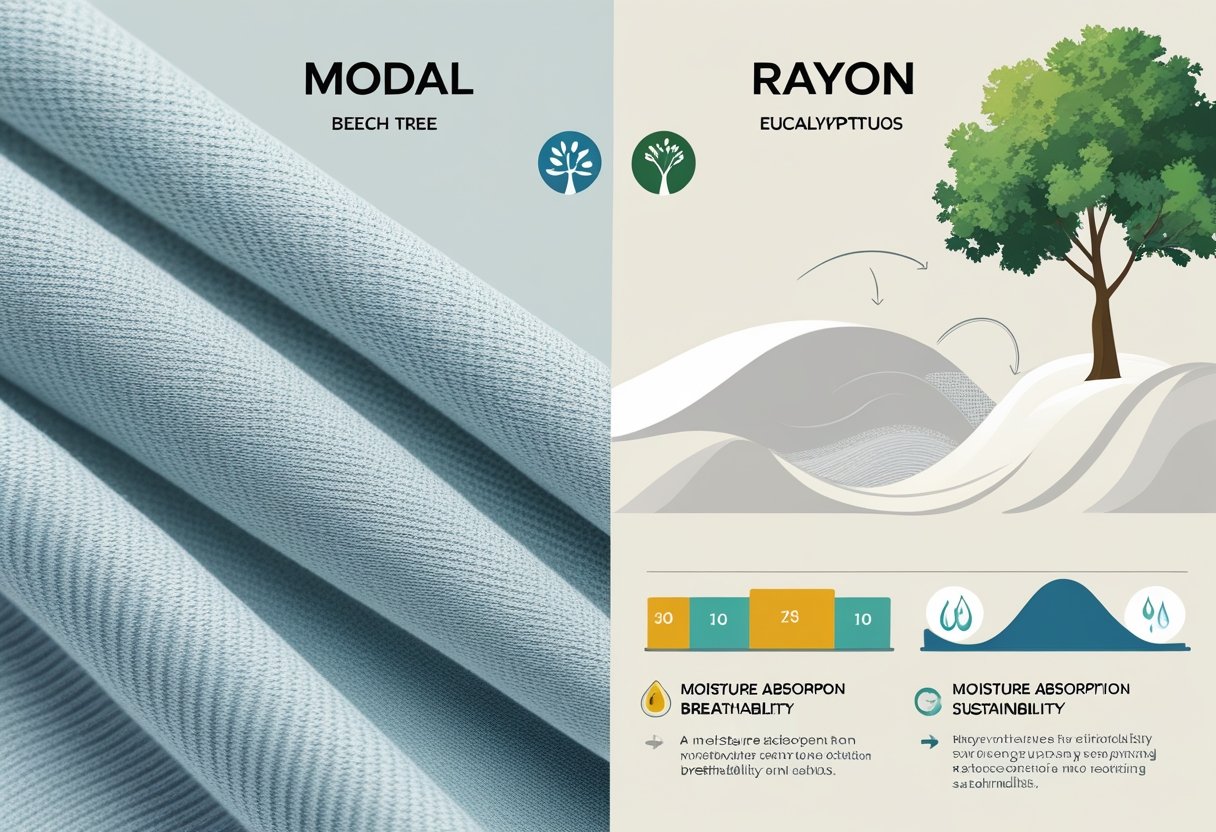
You often see modal and rayon grouped together because they share the same base material. The key differences come from how makers process the cellulose and control fabric production, which affects feel, strength, and environmental impact.
Rayon is a semi-synthetic fabric made from regenerated cellulose taken from wood pulp. This fiber starts as plant matter, then goes through a chemical process.
That process defines each type of rayon. Viscose rayon is the most common form.
Viscose production uses a traditional viscose process that costs less but uses a lot of water. It creates a soft and drapey textile with a silky texture.
Many people see it as an artificial silk and a cheaper than silk alternative for dresses and blouses.
Modal is a type of rayon using beech tree pulp. Makers use beech trees once, from sustainably harvested forests.
This type of modal has higher wet strength, less shrinkage, and better wrinkle control. Modal fabric made this way resists pilling and stays soft even after multiple washes.
You often find it in loungewear and apparel made from modal blends with cotton or polyester.
Lyocell is another form of rayon. It uses eucalyptus and a closed-loop method that reduces waste.
This fiber feels smooth, drapey, and breathable.
| Type | Source | Key Traits |
|---|---|---|
| Viscose | Wood pulp | Soft, low fabric cost |
| Modal | Beech | Strong, moisture-wicking |
| Lyocell | Eucalyptus | Eco-friendly, stable |
Tencel™ is a branded version of lyocell and modal made by Lenzing. You will see tencel used as a quality label, not a fiber type.
Lenzing controls rayon production from forest management to the finished fiber. Tencel modal and tencel lyocell focus on low environmental impact.
The process recycles water and solvents, which makes it more eco-friendly than standard making rayon methods. These fibers wick moisture, support breathability, and feel cool and comfortable on skin.
Branded options mainly improve consistency, sourcing, and traceability. For you, that means better durability, reliable softness, and fewer surprises in a rayon dress or everyday garment.
Modal and rayon both come from plant sources, but their environmental impact depends on how brands manage raw materials and chemicals. The biggest differences involve forest sourcing, water use, and how each semi-synthetic fabric handles chemical recovery during fabric production.
Modal is a form of rayon made from beech tree pulp, a source of regenerated cellulose. Most modal comes from rayon using beech trees, often from sustainably harvested forests.
Lenzing makes modal using tightly controlled systems that recover chemicals and reduce waste. This approach lowers water use and limits harm to the environment.
Modal is a type of rayon using beech, also called hwm rayon, and brands market it as more eco-friendly than basic viscose. The fiber stays strong, resists pilling, and holds shape with less shrinkage, even after multiple washes.
You often see tencel™ modal compared with lyocell, which uses eucalyptus and a closed-loop process. Lyocell usually ranks higher, but modal still performs better than many rayon fabrics.
Modal fabric made for loungewear, dresses and blouses, and underwear feels soft and drapey, with good breathability and moisture-wicking comfort.
Rayon is a popular fabric and a type of rayon family that includes viscose, cupro, and bamboo rayon. Manufacturers make rayon from wood pulp, but rayon production often relies on a heavy chemical process.
Traditional viscose production uses a lot of water and energy, which can be harmful to the environment if factories fail to control waste. You may see rayon made from bamboo viscose or bamboo rayon labeled as green, but the viscose process remains the same.
This method affects rivers and air when producers skip proper treatment. Rayon fabrics still appeal because they feel soft and smooth, offer good drape, and act as an alternative to silk that is cheaper than silk.
Rayon works well in a rayon dress, blouse, or lightweight apparel because it is highly absorbent and breathable. Still, compared with modal and rayon made by Lenzing, standard rayon costs less in fabric cost but carries higher environmental risks.
Modal tends to last longer than standard rayon fabrics. Modal resists pilling and holds its shape better, even after multiple washes.
Rayon can weaken when wet and may show wear sooner. A rayon dress can last well with gentle care, but modal retains its structure more reliably.
Modal is a type of rayon with higher wet strength. This makes it a stronger option for loungewear and everyday apparel.
Both modal and rayon are semi-synthetic fabric options made from regenerated cellulose. The source and process create the main environmental impact differences between modal.
Modal fabric made from beech tree pulp often comes from sustainably harvested forests. Some producers, including Lenzing, use closed-loop systems that reuse chemicals and water.
Rayon production can use a lot of water and harsh chemicals. Poorly managed rayon production can be harmful to the environment.
Modal feels cool and comfortable because it allows steady airflow through the fiber. The feel of modal stays smooth against the skin in warm weather.
Rayon is also breathable, but it can trap moisture more easily. Breathability varies by the type of rayon, such as viscose or hwm rayon.
Both fabrics drape well, but modal often feels lighter and more consistent in heat.
Modal is easy to care for and handles regular washing with less risk. It shows less wrinkle and keeps a soft and smooth surface.
Rayon needs more care to avoid shrinkage and damage. You should wash it gently and avoid high heat when drying a garment.
A modal blend with polyester can further improve durability and reduce care needs.
Modal offers stronger moisture-wicking performance. The fiber can wick sweat away from your skin and stay dry longer.
Rayon is highly absorbent but does not wick as efficiently. It can feel damp during long wear.
This makes modal a popular fabric for loungewear and sleepwear where comfort matters most.
Rayon made from wood pulp goes through a chemical process that turns cellulose fibers into a usable textile. Viscose production is the most common method.
Modal is a form of rayon using beech trees. Manufacturers use a modified viscose process that makes modal stronger and more stable.
Some rayon types include bamboo rayon, cupro, and lyocell such as tencel made from eucalyptus. These semi-synthetic fibers vary in fabric cost, resource use, and performance.